Mexican Restaurants in Phnom Penh: Tacos, Cantinas and the City's Adopted Cuisine
Phnom Penh has more Mexican restaurants than most visitors expect, and Toul Tom Poung, almost by accident, has become the city's unofficial taco quarter. Here is where the cantina culture started, and where it has gone since.
Mexican food has no business being one of Phnom Penh's more reliable cuisines, and yet it is. There is no Mexican community here, no historical trade route, no colonial inheritance the way there is with French bread or Indian spice merchants. What exists instead is three decades of American and Californian expats who missed tacos badly enough to open kitchens, and a city that turned out to have an appetite for what they were cooking. The result is a small but genuinely accomplished cluster of restaurants: chef-driven cantinas, husband-and-wife taco counters, a Khmer-Mexican fusion experiment, and one diner that has been quietly serving fajitas since 2009.
The scene has also, without anyone planning it, developed a centre of gravity. Toul Tom Poung (the streets around the Russian Market) now holds the highest concentration of Mexican kitchens in the city, a half-dozen venues within easy walking distance of one another. It is worth knowing this before you start, because it changes how you plan an evening: you can do a serious Mexican crawl in TTP alone, or you can range further out to BKK1, the riverside, and Toul Kork for the more polished, occasion-driven end of the cuisine.
Here is how Phnom Penh's Mexican food breaks down, from the restaurant that has outlasted every competitor in the city to the street-taco counters working out of converted shophouses.
The Cantinas: The Full Production
Phnom Penh's most ambitious Mexican cooking runs through one chef and one extended restaurant family, though the city's longest-running cantina, as it happens, has quietly been doing its own version of the same thing for two decades.
Mexicano (62 Street 135, Toul Tompong) is the flagship of chef Mario Galán Ibarra, who trained in his native Puerto Vallarta before cooking his way through Singapore and Ho Chi Minh City en route to Phnom Penh. The kitchen's signature is a genuinely old-school commitment to technique: handmade corn tortillas and an eighteen-hour carnitas that few other kitchens in the city would bother attempting. The room runs a fuller, more composed menu than most of its competitors: carne asada, chicken fajitas, enchiladas suizas, a churro to close, and a salsa selection deep enough to satisfy diners who have actually eaten their way around Mexico.
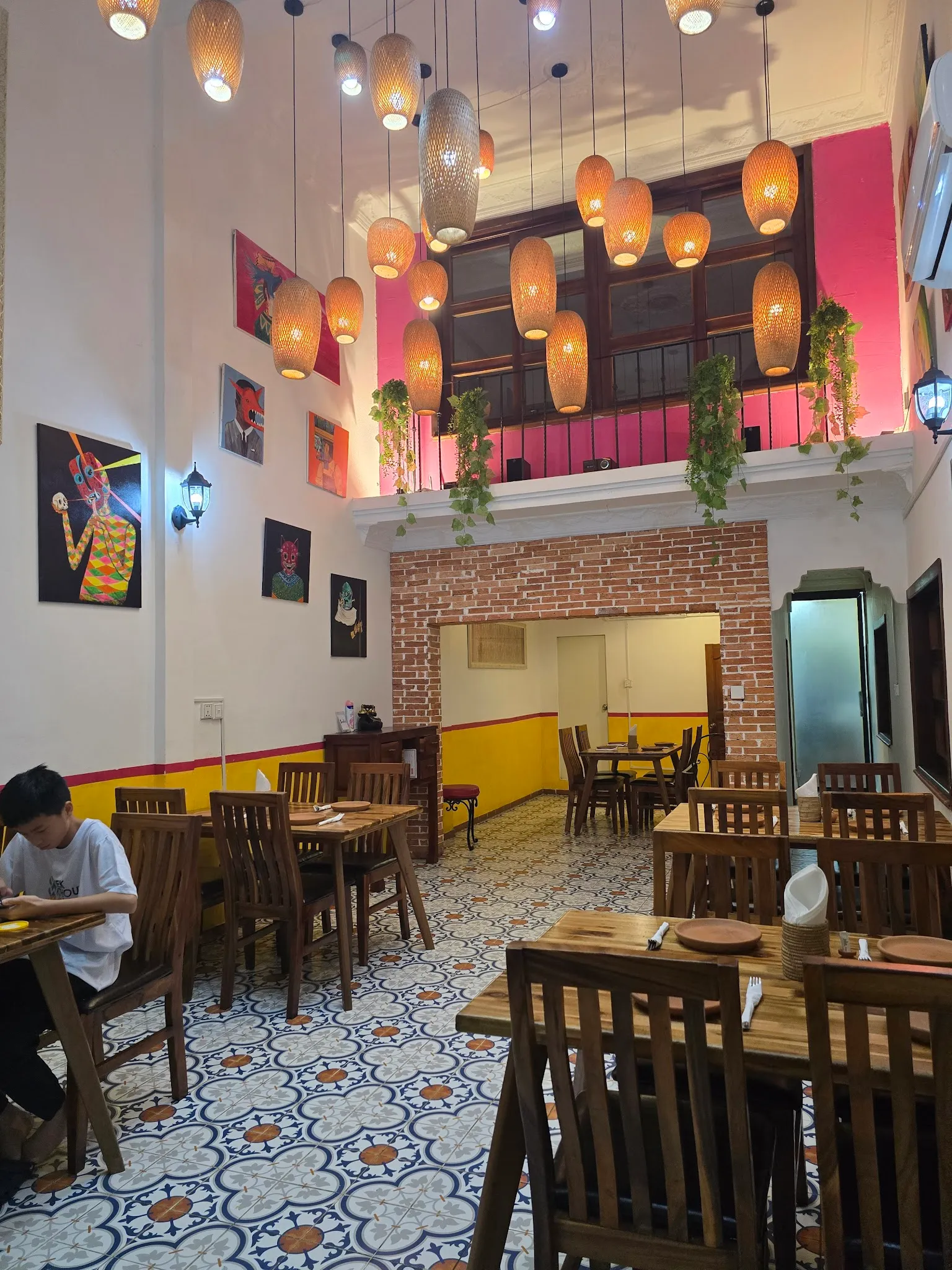
Galán Ibarra's other venture is the COMPAS family, a more affordable spin-off built with business partner Jovany Antonio specifically to bring Mexican food within reach of the local Khmer market, with taco prices capped low enough to make that ambition credible. The original branch sits on Sisowath Quay, already covered in BongNham's riverside restaurant guide, but the brand has since expanded to Compas Toul Kork (5 Street 317), where duck tacos and birria-style tacos sit alongside fresh-squeezed lime margaritas, and Compas Koh Pich (A05B, Koh Pich Street), bringing the same affordable formula to Diamond Island. It is the same kitchen behind both addresses, simply pitched at two different price points: the riverside cantina built for a full sit-down occasion, the Toul Kork branch closer to a quick taco stop.
For BKK1, the equivalent destination is Itacate (6B Street 302), open for lunch and dinner and closed Mondays. The kitchen covers the Tex-Mex and traditional Mexican canon with real range (fajitas, burritos, enchiladas, chimichanga) backed by a tequila and mezcal list serious enough to support a proper mezcalita rather than a frozen afterthought. It is the BKK1 answer to Mexicano: a full sit-down cantina experience rather than a quick taco stop.
Tacos Kokopelli (42 Street 19z) thinks of itself in much the same terms (a small neighbourhood cantina rather than a destination restaurant), even though it predates, by a comfortable margin, every one of them. The business began in 2005 as the Alley Cat Cafe, and has operated under the same management ever since, rebranding into its current cantina-and-burger identity over the years that followed. That continuity matters: more than two decades under one crew is a rarer credential in Phnom Penh's restaurant scene than a five-star rating could ever be. The menu has settled into three confident categories: authentic Mexican (street tacos, enchiladas and tostadas); loaded Tex-Mex (burritos, quesadillas and fajitas); and burgers (hundred-and-twenty-five-gram patties that can be doubled up or combined with slow-cooked shredded meats for something that splits the difference between a burger and a taco plate). It is the kind of menu that only makes sense after twenty years of watching what a Phnom Penh crowd actually orders. Its one genuinely original creation (and the dish photographed at the top of this guide) is the chicken skin nachos: crispy deep-fried chicken skins individually loaded with pork carnitas, melted cheese, jalapeño, sour cream and salsa, a plate that turns up nowhere else in the city.
The Street Taco Specialists
This is where Toul Tom Poung's accidental Mexican quarter does its best work: small, often family-run counters built around doing two or three things very well rather than running a full restaurant menu.
Bay Area Tacos (#4 Street 450) is a twelve-seat operation run by a local husband-and-wife team, and the scale shows in the food: bold, confidently seasoned street-style tacos, a skirt steak set, and margaritas poured with the same lack of pretension as everything else on the menu. It is the kind of place that exists because the owners wanted to cook this food, not because a market study told them to.
A short walk away, La Cocina Mexican Food (5A Street 135) is the newest entrant on this list, having opened in October 2025, and it has slotted into the neighbourhood with a tight menu of tacos and burritos (pulled pork and river fish among the fillings) that suggests a kitchen more interested in getting the fundamentals right than chasing novelty.
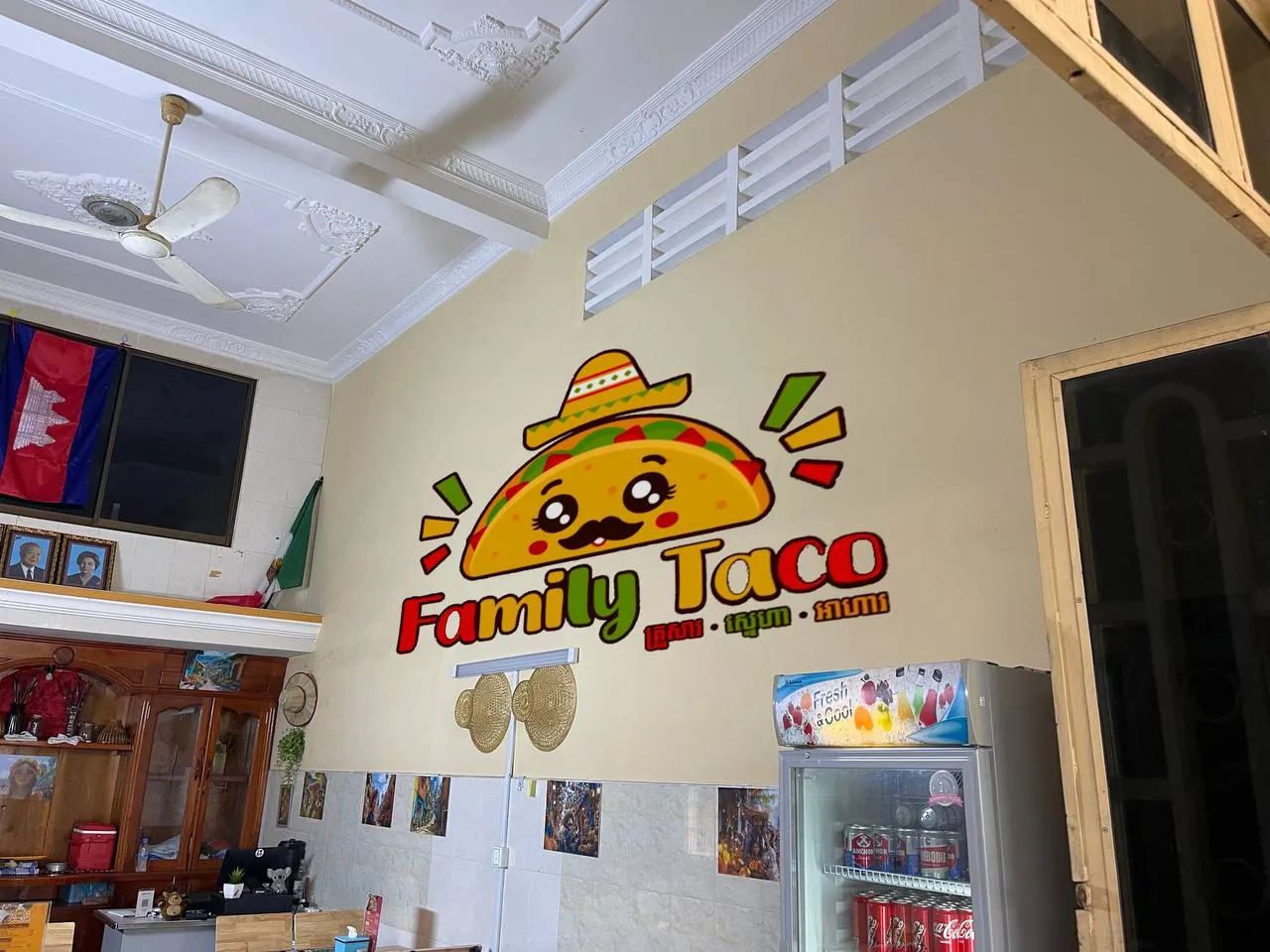
Family Taco Recipe (Street 454) has carved out the most distinctive niche of any Mexican kitchen in the city: birria. Owner Kong Noeun runs an open-air spot near the Russian Market built almost entirely around the slow-braised, deeply savoury beef dish (birria burritos, birria tacos, a cheesy birria quesadilla) served in portions large enough to justify the description "homey." It is a genuinely useful address for anyone who has had birria elsewhere and wondered if Phnom Penh could do it justice.
Dos Besos Mexican Delivery (13 Street 105a) rounds out the TTP cluster, and the name is the menu's organising principle: this is a delivery-first cantina, with a wet burrito and carne asada tacos doing the heavy lifting and grilled shrimp tacos for anyone wanting something lighter. Cinnamon crisps for dessert is a small, well-judged touch that a lot of Mexican menus in this city skip entirely.
Fusion and the Tex-Mex Crossover
Not every Mexican-adjacent kitchen in Phnom Penh is playing it straight, and the two most interesting departures sit at opposite ends of the spectrum.
KHMEX'ed – Khmer Tacos (59A Street 350) is exactly what the name promises: a small, affordable experiment in folding Cambodian ingredients into the Mexican taco format. Lemongrass-marinated pork in a soft-shell taco is the standout, alongside a pineapple lemongrass pork burrito that makes the same case in a different shape. It is a genuinely original idea executed at street-food prices, and the kind of restaurant that the city's larger aggregator sites (built on scraping other people's "best of" lists) would never surface, because nobody has written about it yet.
At the other end, Lone Pine (76 Street 244) is technically an American diner, established in 2009, rather than a dedicated Mexican restaurant, but roughly three-quarters of its menu is Tex-Mex and Mexican, which earns it a place here regardless of how it is officially filed. Sizzling fajitas, a California burrito, cheese quesadillas and red enchiladas sit alongside burgers and wings, and the portions have built a loyal following over more than fifteen years of service.
Toul Tom Poung's Piseth's Cali Burrito also belongs in this conversation (a Cali-style burrito stuffed, famously, with French fries), but it has already had its full write-up in BongNham's Toul Tom Poung food guide, where it sits alongside the rest of the neighbourhood's casual eating scene.
Tips for Eating Mexican in Phnom Penh
Toul Tom Poung is the centre of gravity. Mexicano, Bay Area Tacos, La Cocina, Family Taco Recipe and Dos Besos all sit within a few streets of the Russian Market, which makes an evening taco crawl genuinely walkable rather than a tuk-tuk relay across the city.
Happy hour and Taco Tuesday are real institutions here. Several of the cantinas (Tacos Kokopelli among them) build weekly rhythms around discounted margaritas and taco specials. If a deal matters to your evening, check the specific day before you go.
Expect Tex-Mex leanings more often than strict regional Mexican. With the exception of Mexicano's more traditional, technique-led menu, most of the city's Mexican kitchens sit closer to the Californian and Tex-Mex end of the spectrum (burritos, fajitas, loaded nachos) than to the regional cooking of central or southern Mexico.
Delivery is a genuine option, not an afterthought. Most of these kitchens deliver, which is useful to know if a craving strikes somewhere far from TTP or BKK1.
Spice levels are generally moderate. Salsas tend to be calibrated for a broad Phnom Penh audience rather than for heat-seekers. If you want it hotter, ask. Most kitchens here are happy to oblige rather than offended by the request.
Mexican food in Phnom Penh is not an imported curiosity kept alive for homesick expats, and it has stopped behaving like one. It has put down roots deep enough to produce a twenty-year institution, a chef with two distinct restaurant brands at two different price points, a birria specialist, and a fusion experiment that nobody asked for and everybody seems glad exists. None of that happened by design: it happened because enough people kept ordering tacos that the kitchens kept getting better. Start on Street 19z with authentic Mexican, or Tex-Mex, or finish a few streets from the Russian Market with a birria burrito, but pick one. This is not, in practice, crawl food; the portions alone will settle that question for you after the first stop. It is, all the same, as honest a way as any to spend an evening eating a cuisine that has no real reason to be this good here, and is anyway.
Looking for more? Browse every Mexican spot in the city on BongNham, or read our neighbourhood guides to Toul Tom Poung and Riverside dining. Planning a full day of eating? Follow our one-day Phnom Penh itinerary.