Phnom Penh's Coffee Scene: The Chains, and the Independents Worth Crossing Town For
Phnom Penh's coffee, chain by chain and district by district: Brown, TUBE, Starbucks, % Arabica and the newcomers, then the independent cafés worth a tuk-tuk ride beyond BKK1.
The oldest coffee in Phnom Penh is still the easiest to find. On almost any corner, from the market lanes of Psar Thmei to the boreys of Sen Sok, a stall will pour a glass of crushed ice, a thick layer of condensed milk and a dark, heavily roasted brew dripped through a cloth filter. For decades that was the city's coffee, and for millions of people it still is.
What changed was the café. In 2009 five young Cambodian cousins opened a coffee shop on Street 214 with air conditioning and an espresso machine, and the idea that a coffee could be somewhere to sit, rather than something to drink on a plastic stool before work, took hold fast. Within fifteen years Phnom Penh had become a crowded coffee market: homegrown chains with dozens of branches, the global brands queuing behind them, and a newer layer of independent cafés roasting their own beans or buying from Cambodian roasters such as Feel Good Coffee, which has been roasting in Phnom Penh since 2013.
Here is how the city's coffee divides up: the chains first, and what each one is actually good for, then the independents worth crossing town for, district by district.
The Chains
Brown: The One That Started It
BROWN Roastery | BKK is the most useful introduction to the company that built modern café culture in Cambodia. Brown was founded in 2009 by five cousins in their twenties, funded by a $150,000 loan from relatives, and it is widely credited with bringing the Western café format to the country. It never copied that format wholesale. The menu runs from flat whites and filter coffee to the Phnom Penh Coffee, Brown's take on the local street brews: strong brewed coffee with sweet condensed milk and oat milk. Pastries, pasta and a full breakfast menu sit alongside, and the roastery branches are spacious enough that people treat them as offices.
BROWN Roastery | Sothearos is the pick for the Royal Palace end of town. The most interesting Brown in the city, though, is the one in Vann Molyvann's own house on Mao Tse Toung Boulevard, at the corner of Street 163. The architect behind the Independence Monument built it in 1966 as his family home and studio, and Brown opened there in 2025. Few coffee chains anywhere get to pour flat whites inside a landmark of New Khmer Architecture.
TUBE Coffee: Fast, Cheap and Everywhere
If Brown made the café a place to linger, TUBE made it a habit. Founded in 2017 and led by co-founder and CEO Sou Monypich, the company opened its sixty-first store in January 2026 and has said it is aiming for one hundred. Its tagline promises speed and affordability, and it delivers both. The signature drink is Thnol Coffee, a locally inspired recipe.
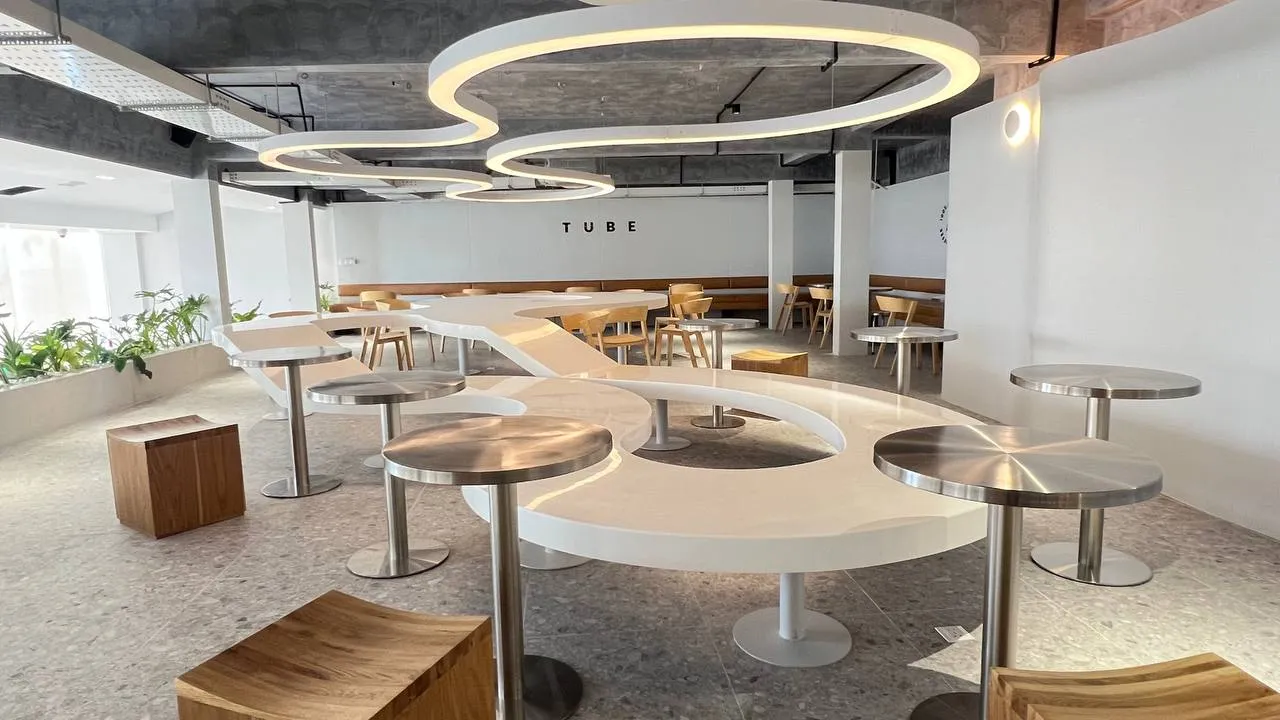
The branch to know is TUBE COFFEE Riverside, a flagship whose main seating area is on the second floor, behind floor-to-ceiling windows facing the Tonle Sap. It opens early and stays open late into the evening, which makes it one of the few places on the quay that works as well for the first coffee of the day as for the last.
Starbucks: The Global Name, Localised
Starbucks arrived in December 2015 through its licensed partner Coffee Concepts (Cambodia), then part of Hong Kong's Maxim's Group, with a first store at the airport. It has since become a serious presence, with 57 stores across eight cities by November 2025. Its fiftieth, the Starbucks Reserve Diamond on Koh Pich, opened in February 2025, and the company added a drive-through format in 2022.
In the centre, Starbucks is the BKK1 workhorse, and Starbucks | The Bridge Tower is the most convenient for Koh Pich and the riverside.
% Arabica: The Design Statement
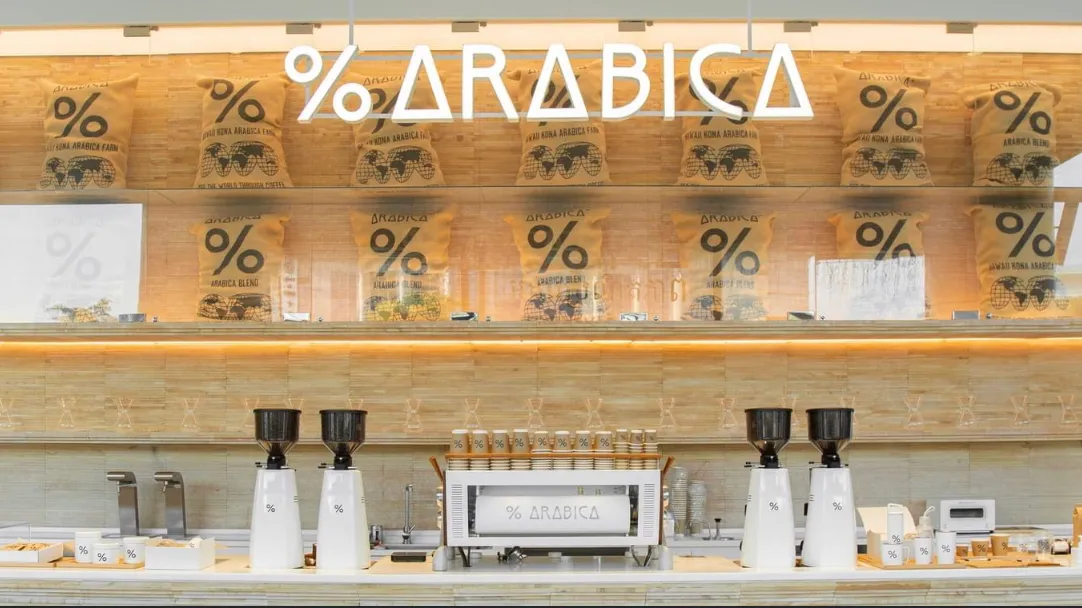
The Japanese chain founded by Kenneth Shoji opened its first Cambodian store at % Arabica Phnom Penh Vattanac Capital, its forty-seventh worldwide, in the city's most recognisable tower. A second branch followed at % Arabica Phnom Penh The Commune Toul Kork, and the company later opened Cambodia's first % Arabica roastery in the basement of the Vattanac Capital Lifestyle Park. The menu is short, the Kyoto Latte is the order, and the prices sit at the top of the market. You are paying for consistency and a very well-designed room.
Gloria Jean's: The First Franchise
Gloria Jean's has a claim no one else can make: it was the first international coffee franchise in Cambodia, opening on Street 51 after a Cambodian firm bought the rights. It has since spread across the city and into the provinces. Gloria Jean's Coffees BKK is the quieter of the BKK1 chain options.
Café Amazon, and the Newcomers
Until recently the chain with the most outlets in Cambodia was Café Amazon, the Thai brand run by PTT Oil and Retail (OR), which made its international debut here in 2012. Its position has changed sharply. A border dispute between Thailand and Cambodia led to consumer boycotts and dozens of store closures, the Cambodian network stood at 136 outlets at the end of the first quarter of 2026, and its parent company has said it is reassessing the business.
The newest arrival is Korean. Mega MGC Coffee, which has some 4,500 stores at home, opened its first Cambodian store on Koh Pich on 7 October 2026, followed by a branch in Bak Touk, and plans more than twenty stores by 2027. In South Korea it built its lead on small grab-and-go counters; the Phnom Penh flagship is designed for longer visits.
The Local Workhorses
Three smaller Cambodian operators fill gaps the big names leave. Coffee Bridge 24H BKK is part of a round-the-clock chain that is popular with students and remote workers. Park Café belongs to a group operating since 2004 that pairs strong Cambodian coffee with kuy teav and cooks without MSG. And The Shop Tuol Kork, part of a Belgian-founded bakery group that began on Street 240, has been serving pastries and coffee in a house with a shaded garden since 2009, which makes it one of the longest-running cafés in Toul Kork.
The Independents
The chains are where most of the city drinks. The independents are where most of the interesting coffee is. BKK1 has the densest concentration and its own guide, so what follows looks beyond it, to the cafés that reward a tuk-tuk ride.
Around the Royal Palace and Street 240
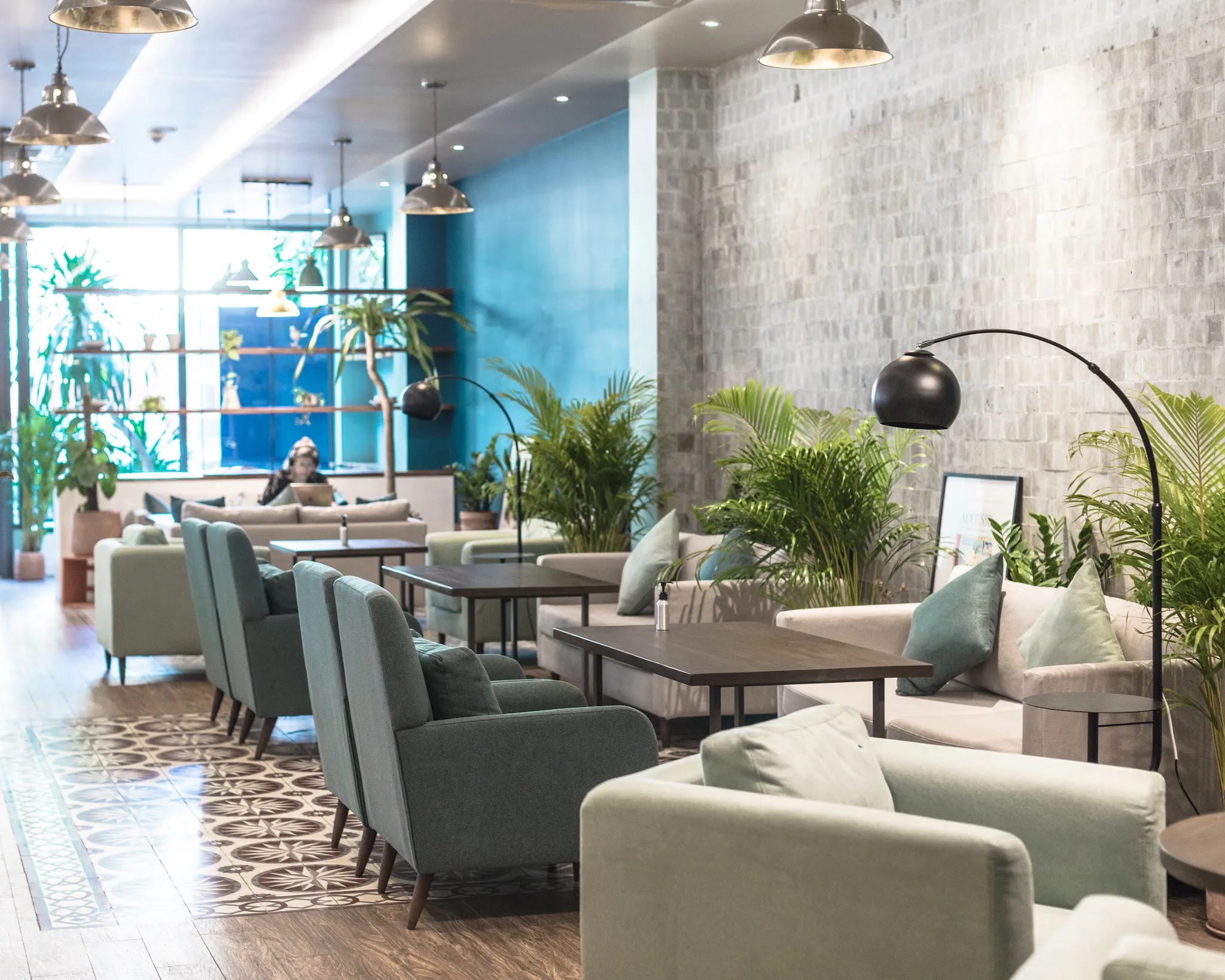
Street 240 has been the city's boutique street for as long as it has had boutiques, and its coffee has kept pace. Enso Cafe brews with Feel Good beans and makes its own cashew milk, and the kitchen's plant-based cooking, from eggplant lasagne to quinoa porridge, is a cut above the usual café salad. A short walk away, on a side street off Street 240 near the Royal Palace, Melbourne Coffee Phnom Penh does exactly what the name promises: flat whites, long blacks and a breakfast muffin of sausage, bacon, egg and avocado that would pass muster in its namesake city.
A few blocks west, Kuro Specialty Coffee is the quiet one. The room is light wood and clean lines, the focus is single-origin pour-over, and the atmosphere rewards anyone who came for the coffee rather than taking selfies.
North of the Palace: Sothearos, Street 178 and Street 130
The streets between the National Museum and Wat Phnom hold the city's most varied coffee, and the most Cambodian. Café Chiet, a short walk from the palace and Wat Ounalom, serves egg coffee and Phnom Penh noodles, an unusually good breakfast pairing, as part of its expansive menu of drinks, local and international dishes, in a room styled on traditional Khmer architecture. Around the corner on Street 178, Coffee Home Khmer Boran specialises in the old-style roast, beans darkened with vegetable fat in the traditional way, which produces the deep, dark iced coffee the street stalls are built on. The walls are a canvas, and leaving an artistic mark is encouraged. Order the house iced coffee and you will understand where the city's palate comes from.
At the other end of the spectrum, 80 S (Eighty Scores) Plus Coffee is a roaster-café whose name nods to the eighty-point score that marks coffee as speciality grade. The menu has carried a Colombian Geisha, which tells you most of what you need to know.
Toul Tom Poung
The streets around the Russian Market have become the city's second coffee neighbourhood after BKK1, and its cafés have more personality per square metre. DEJA . CAFE roast & brew roasts its own beans and serves them as filter and espresso in a pleasantly green environment thanks to the lush greenery displayed outside the windows, with a brunch menu serious enough to justify staying.
The smaller and more personal of the two is Mr. Piccolo Coffee, a tiny owner-run corner café where barista and baker Chak brews with Feel Good beans and bakes the cakes in-house. The piccolo latte is the order. It is closed on Mondays.
Hungry? For a bite with your coffee, Lot 369 does it Melbourne-style, with health bowls from paleo to poke, smoothies and a super flat white. Nutty Bakery specialises in gourmet sandwiches and burgers; go nuts with the Peanut Butter sandwich, with crispy bacon, cheddar, fresh tomato and lightly grilled pineapple. Finally, The Muffin Man offers muffins and a lot more alongside your morning brew: pies, quiches, sandwiches, cakes and pastries, all made to the Australian standards the Khmer owner learnt from pastry chef Kerry Viney. For the rest of the neighbourhood's eating, see the Toul Tom Poung guide.
Toul Kork and the West
Toul Kork's coffee is younger and more design-led. The Choco Cafe has built an entire Korean street around its K-inspired café, and it is big with the Insta crowd. The coffee menu runs from the Kiss, on frothed milk, and the Stick, with a creamsicle in it, to the Sorbet, with a scoop, the Choco, of course, and the classics. A little south in Teuk Laak, COFFEE LAB KH is the destination for experimental flavours, from The Lab, an espresso with condensed milk, to the Passicano, an americano with passionfruit. It also mixes matcha and teas, and the room is sleek enough for a meeting and quiet enough for an afternoon's work.
For something more grounded, Palm Coffee ToulKork is a spacious café that doubles as a proper Khmer kitchen, equally good for a Palm Latte and a laptop or a plate of bai sach chrouk. Rosie Coffee and Bakery serves Khmer food and coffee around the clock in a comfortable, spacious room. The Toul Kork dining guide covers the rest of the district.
Across the Water and Further Out
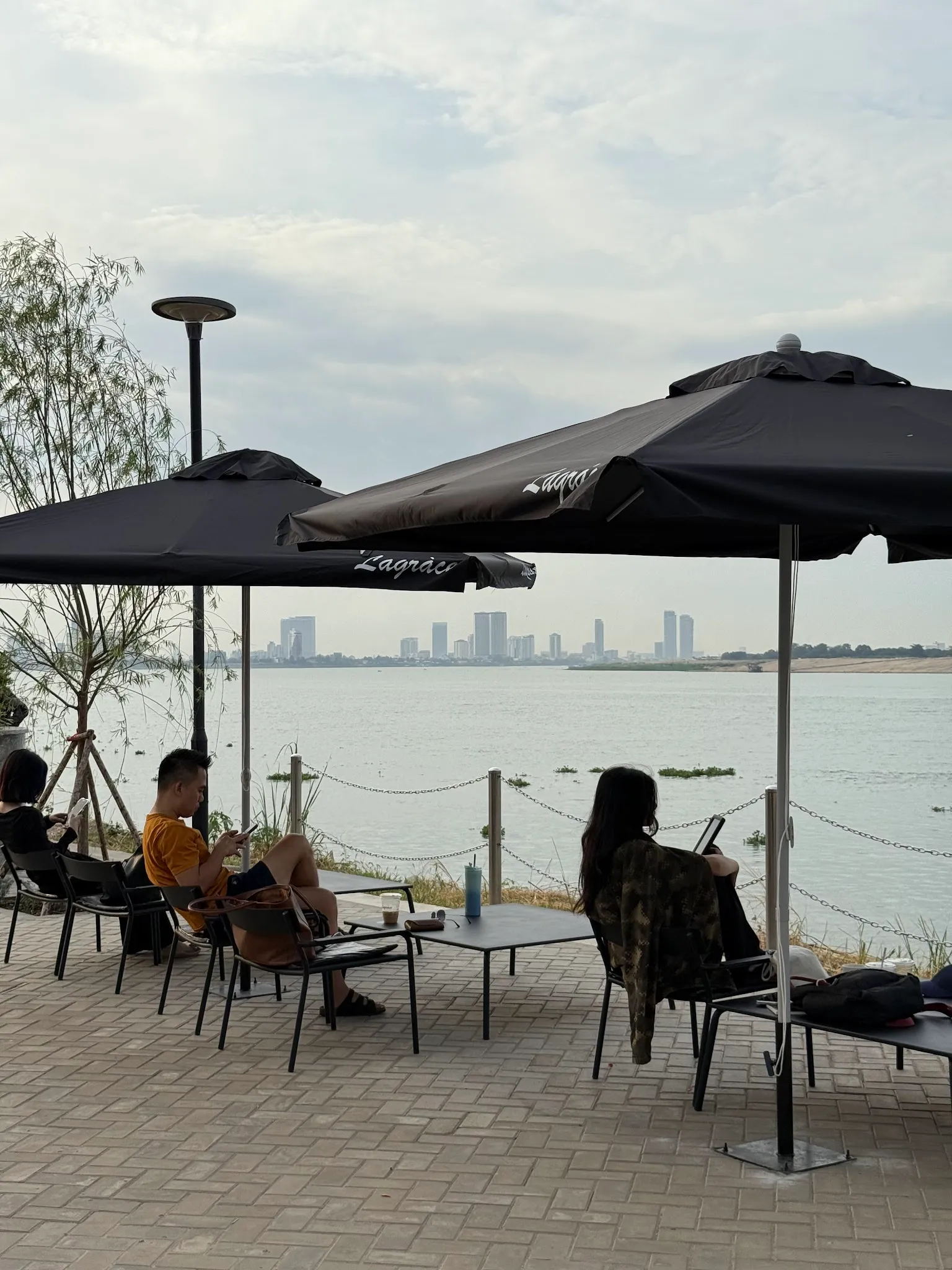
Some of the most pleasant coffee in Phnom Penh is on the other side of a river. Fresh Talk Coffee is a garden café on the far bank of the Tonle Sap in Chroy Changvar, serving palm syrup and jasmine coconut lattes, alongside a very reasonably priced selection of coffees and teas. It keeps short hours, closing mid-afternoon and all day Sunday, so plan for the morning. On Koh Norea, Lagràce Cafe 2nd Koh Norea has river views from both its air-conditioned room and its terrace, and opens early enough to catch the light on the water.
Furthest out, and worth the ride for anyone interested in where Cambodian coffee comes from, F Cafe - Chamkar Doung was established in 2017 to support Cambodian farmers, using beans certified to the CEDAC organic standard. The menu is short and the setting is a residential borey, but few cafés in the city are as clear about where their beans come from.
Tips for Drinking Coffee in Phnom Penh
Order the local way at least once: Ask for kafe toek doh ko toek kok, iced coffee with condensed milk, at a street stall. It is sweet, strong and costs a fraction of anything on this list, and every Khmer-style drink on a café menu is a variation on it.
Mind the sugar: Iced drinks in Phnom Penh, at chains and independents alike, come sweet by default. If you want less, say so when you order rather than after.
Check hours before you cross town: Many of the smaller independents close by late afternoon. If you are planning a coffee crawl, start in the morning and save the chains for later.
Late-night coffee: Coffee Bridge 24H and Rosie Coffee and Bakery in Toul Kork run around the clock, and TUBE Riverside stays open late into the evening. Most independents will be dark long before then.
Beat the heat: The hours between noon and three are for air-conditioned interiors. Garden cafés such as Fresh Talk and the terrace at Lagràce on Koh Norea are at their best early in the day.
Getting around: The independents are spread across the city rather than clustered in one place, so a coffee day works best by tuk-tuk or PassApp, taking one district at a time.
Phnom Penh's coffee is often framed as chains against independents, but the city does not really drink that way. The same office worker might start the day at a street stall, hold a meeting in an air-conditioned chain, spend the afternoon on a laptop wherever the Wi-Fi is fastest and keep Saturday morning for a pour-over in Toul Tom Poung. What ties it all together is the glass of dark, sweet iced coffee that came first, and which every café in the city, however polished its espresso machine, is still in conversation with.