Vietnamese Food in Phnom Penh: Where to Find Real Pho, Bun Cha and More
A bowl of pho before eight in the morning, a plate of Hanoi bun cha at lunch, a wagyu banh mi in a mall food court: Phnom Penh's Vietnamese kitchens run deeper than the city gives them credit for. Here is where to eat the real thing, from broth houses to regional specialists.
Cambodia and Vietnam share a border that runs for more than a thousand kilometres, and they share a great deal else besides: centuries of trade, migration, and a culinary back-and-forth that shows up on Phnom Penh tables in ways most diners never stop to notice. The fish-sauce-and-herb logic that runs through Khmer cooking has a Vietnamese cousin a short drive east, and the two have been borrowing from each other for as long as anyone has been keeping track. What this means in practice is that Phnom Penh has a Vietnamese food scene with real roots rather than a handful of expat approximations: kitchens run by Vietnamese owners cooking the dishes of specific regions, often for a crowd that knows exactly what it is ordering.
Most visitors meet Vietnamese food here as pho, and stop there. That is a mistake. Pho is the entry point, not the whole house. Spend a little time across the city and you will find the spicy lemongrass complexity of Hue, the grilled-pork-and-fish-sauce ritual of a Hanoi bun cha, the fried-tofu-and-shrimp-paste pungency of bun dau mam tom, and a banh mi tradition that the French colonial baguette gave to both countries at once. The depth is there. You just have to know where it is.
Here is where to eat Vietnamese in Phnom Penh, organised not by neighbourhood but by what each kitchen does best.
The Broth Houses: Where to Eat Pho
Pho is a discipline before it is a dish. A good bowl is the product of a broth that has been simmering since before dawn, and the places that take it seriously are easy enough to spot: they open early, they specialise narrowly, and they fill with people who came for one thing.
Bassac Pho (12 Samdach Louis Em St / Street 282, BKK1) makes the strongest claim to being where this all started. Run by a Vietnamese chef and positioned as one of the first dedicated Vietnamese noodle specialists in the city, it has built its reputation on a classic phở bò that follows traditional technique rather than cutting corners for a local palate. The menu reaches into central Vietnam too (there is a proper bún bò Huế, spicy with lemongrass and shrimp paste, and a Mekong fermented-fish noodle soup for the adventurous), but the beef pho is the reason to find Street 282.
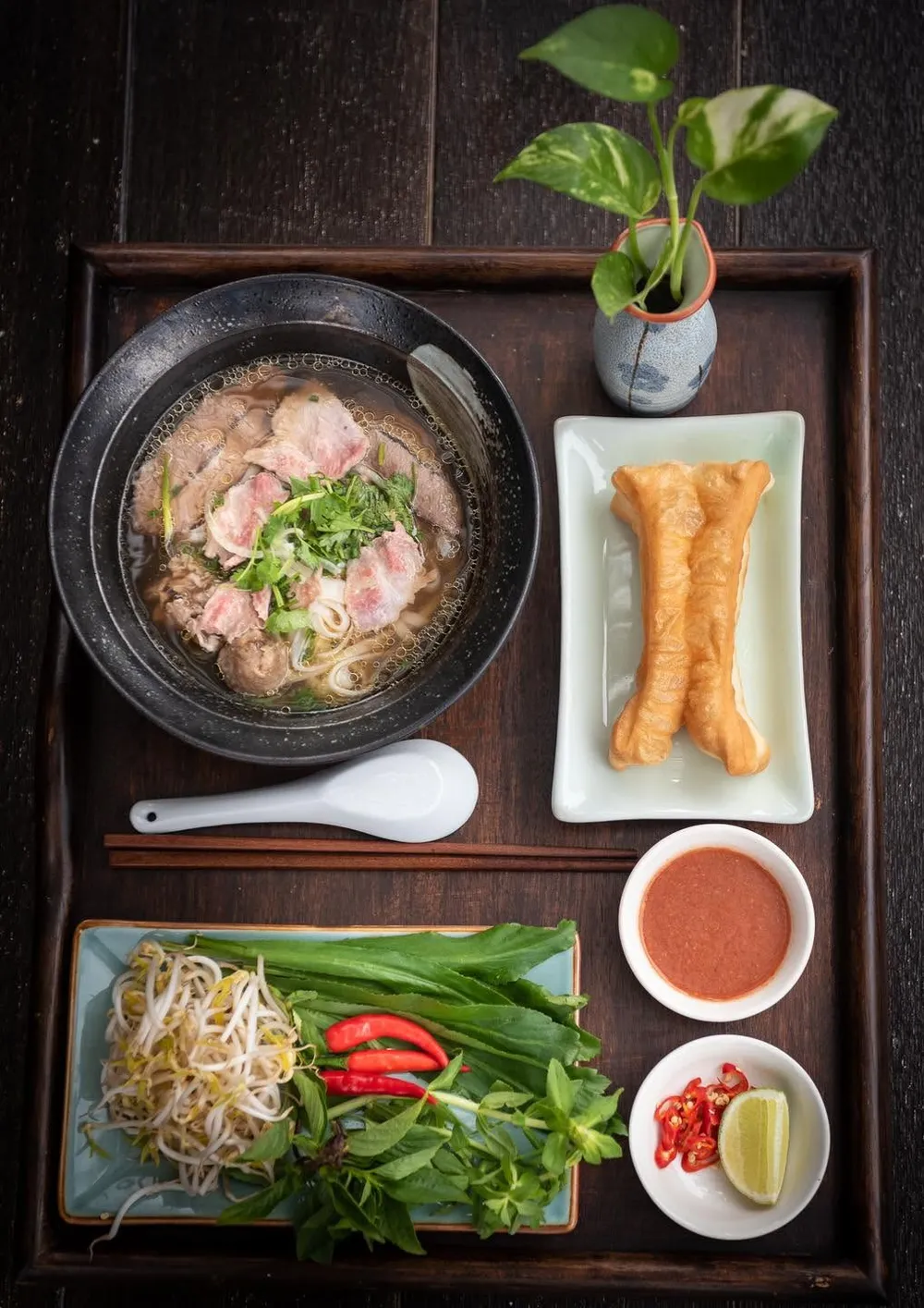
A short way south, Pho Saigon (Acacia St) leans into the southern style its name promises: a cleaner, slightly sweeter broth than the northern bowls, served fast and without ceremony. The thin-fillet beef pho is the order, and the kitchen opens at seven, which makes it one of the more reliable early breakfasts in the BKK1 stretch.
For something with a local twist, Pho Hong (117 Street 3) does a useful thing: it lets you choose your beef. The menu splits between Khmer and Australian cuts, a small distinction that turns out to matter once you taste the difference in the bowl, and the kitchen opens at six for the early crowd. It sits up near the northern end of Street 3, an easy stop if you are starting a day around the riverside or Daun Penh.
And for the no-frills version of the experience, Pho Fortune (15 Street 242, Chak Tomuk) is the downtown standby: an open-concept room with low wooden tables and a courtyard, the kind of place where the atmosphere is the bustle itself. Beef and chicken broths, fresh gỏi cuốn spring rolls, and a Vietnamese iced coffee to finish: the whole grammar of a casual Vietnamese lunch, done without fuss in the heart of the city.
The Northern Table: Hanoi Comes to Phnom Penh
Northern Vietnamese cooking is a different register from the southern bowls: cooler-toned, sharper with fish sauce, built around the grilled-pork-and-dipping-broth dishes that define a Hanoi lunch. A small cluster of Phnom Penh kitchens does this properly, and it is where the city's Vietnamese scene gets genuinely interesting.
Ha Noi Corner (27 Oknha Chrun You Hak St / Street 294) is the anchor. Regulars rate its phở bò Hà Nội among the most authentic bowls in the city (a broth built on northern technique rather than a generic approximation), but the kitchen is just as worth knowing for its bún chả Hà Nội, the Hanoi dish of grilled pork and meatballs served in a bowl of sweet-sharp fish-sauce broth with a side of vermicelli to dip through it. It even runs bún đậu mắm tôm, the fried-tofu-and-fermented-shrimp-paste plate that is the truest test of a northern kitchen's nerve.
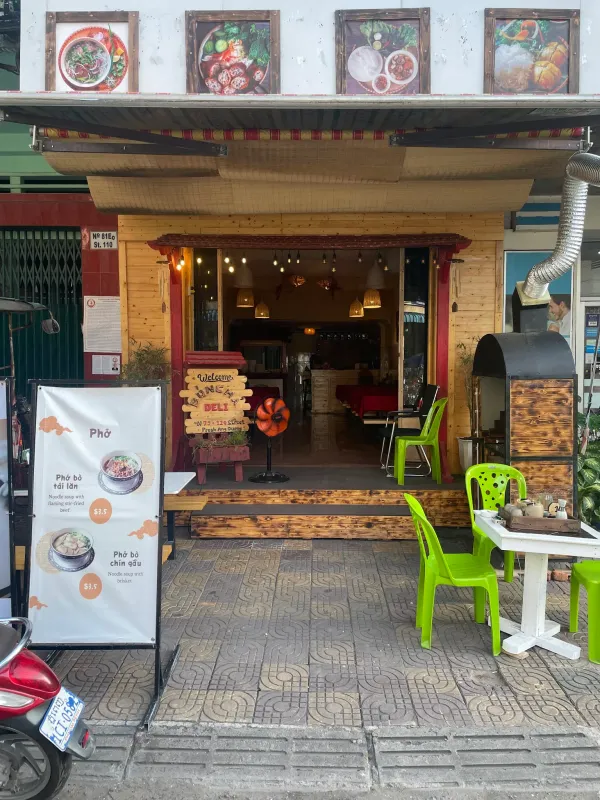
Around the corner of the Old Market on central Street 110, Deli – Vietnamese restaurant (Phở & Bún chả) (79 Street 110, Preah Ang Duong) is the bun cha specialist worth crossing town for. The version here is wonderfully authentic: a subtle, sweet-savoury broth holding two charred grilled-pork meatballs and a generous tangle of fatty grilled pork below, all the traditional accompaniments arranged alongside. Add the nem cua be (a crunchy, crab-filled fried roll that is the classic Hanoi partner to a bun cha bowl) and you have the dish as it is meant to be eaten. The deli format keeps it quick and affordable, and it opens before eight for the breakfast-pho crowd.
For the purest expression of northern street food, Vietnamese Hanoi Food (30 Street 468) builds its entire identity around bún đậu mắm tôm: rice vermicelli with deep-fried golden tofu, boiled pork, and the pungent fermented shrimp-paste sauce that either converts you on the spot or never will. It is not a dish that compromises, and the kitchen does not pretend otherwise. A herb platter, a Vietnamese drip coffee, and a willingness to lean into the funk are all the preparation you need.
Regional Specialists: Hue and the Far Reaches
Beyond the north–south divide, a couple of kitchens stake their reputation on the food of a single region, and they are the ones to seek out when you already know your way around a bowl of pho.
Bun Bo Hue 68 (St 198) is one of the very few Phnom Penh venues built around bún bò Huế, the fiercely spiced lemongrass-and-shrimp-paste beef noodle soup from the old imperial capital of central Vietnam. This is the real thing, pork hock and blood cake and all, served with the banana-blossom-and-mint herb plate that the dish demands. It is a narrow specialisation, and a credible one: the kind of single-dish kitchen that rewards a diner who has decided exactly what they want.
Up at The Landmark on Grand Boulevard, Mai Vermicelli (Bún Mai) (161–163 Chip Mong 271) covers the central and southern repertoire with real range: a strong bún bò Huế, a proper phở bò, and the less commonly seen bánh canh cua, a thick tapioca-noodle crab soup that is hard to find elsewhere in the city. The cơm tấm broken rice rounds out a menu that takes the southern table seriously.
The All-Rounders: Full Vietnamese Kitchens
Sometimes the table calls for breadth rather than a single regional dish: somewhere that can put pho, fresh rolls, grilled mains and a glass of wine in front of a mixed group without missing a step. Phnom Penh's full-service Vietnamese kitchens are where to take that table.
BÚN – Vietnamese Kitchen brings Saigon street flavours into a modern setting, and it does so well enough to have become the default Vietnamese address for the BKK1 crowd at its Langka Lane flagship (47 Rue Pasteur / Street 51, BKK1). The menu is built on bún noodle bowls and pho, with creative liberties like avocado-and-cream-cheese spring rolls and a lemongrass-pork banh mi that keep it from feeling like a museum piece. There is a second branch in Toul Tom Poung (30 Street 123) for the Russian Market crowd, covered in our Toul Tom Poung food guide.
Magnolia Restaurant (55 Oknha Pich St / Street 242) takes a different approach to the same ambition, setting its kitchen inside a restored villa with a leafy courtyard and cooking across the whole of Vietnam with a particular emphasis on Hue. The roll-your-own fresh spring rolls and the bánh xèo (a crisp turmeric pancake cooked outdoors to order) make it a good room for a long, grazing meal, and it serves from six in the morning until eleven at night.
Bassac Garden Restaurant (2 Street 462, Tonle Bassac) does the garden-setting version of the same idea, run by a Vietnamese owner and ranging from southern bánh xèo to central and northern grilled preparations. Four kinds of fresh spring roll, Nha Trang-style grilled rolls, and a properly made bánh mì give it the regional reach that the setting promises.
The Modern Tier: Vietnamese, Elevated
Two kitchens are worth knowing when the occasion is dressed up rather than down, where Vietnamese cooking gets the refinement-and-presentation treatment without losing the plot.
Carrying Pole (GÁNH) (Chip Mong Noro Mall, Preah Norodom Blvd) takes the traditional canon and plates it with genuine care: a considered pho bo, a central-style bún bò Huế, grilled-pork rice, and a chè dessert to finish, all executed with the attention you would expect from a kitchen that treats presentation as part of the cooking rather than an afterthought.
RuNam (Chip Mong 271 Mega Mall) is the upscale chain in the European-garden register: the place for a wagyu phở baguette, a Vietnamese shrimp toast, and an egg coffee in a setting that leans more café-grand than noodle-shop. It is Vietnamese food as a polished sit-down occasion, and it makes the case convincingly.
Tips for Eating Vietnamese in Phnom Penh
Go early for pho. The broth houses do their best work in the morning, when the stock is freshest and the bowls come out fastest. Bassac Pho, Pho Hong and Deli all open between six and eight: a Vietnamese breakfast is one of the better ways to start a Phnom Penh day before the heat arrives.
Know your regions. A southern pho runs sweeter and lighter; a Hanoi bowl is sharper and more savoury; a Hue soup is built on chilli and lemongrass heat. Ordering with the region in mind (rather than just asking for "pho") is the difference between a fine bowl and exactly the one you wanted.
Commit to the funk. Bún đậu mắm tôm and the fermented shrimp-paste sauces are not gentle, and they are not meant to be. If you have never tried them, Ha Noi Corner or Vietnamese Hanoi Food are the places to do it properly. Order the herb plate, follow the lead of the table next to you, prepare for a shockingly intense blast of oceanic umami, and trust the cooling crunch of the fresh veggies to bring the balance.
Cash and small streets. The specialist kitchens (the single-dish pho and bun cha houses) tend to be small, local, and cash-friendliest. Keep a few dollars on you. The mall venues and the modern tier take card and ABA Pay without trouble.
Vietnamese food in Phnom Penh is easy to underrate precisely because it is everywhere: a bowl of pho is never more than a few streets away, and the ubiquity makes it feel ordinary. But the city rewards anyone willing to look past the default order: the Hanoi bun cha on Street 110, the imperial heat of a Hue soup near Street 198, the crab-noodle bowl at The Landmark, the fried-tofu plate that asks something of you. The border to the east has been feeding this city for a very long time, and on the right afternoon (a charred meatball dropped into a sweet-sharp broth, the herb plate going down beside it), Phnom Penh's Vietnamese table is as good as any meal the city offers.
Looking for more? Explore every Vietnamese restaurant in the city on BongNham, or read our neighbourhood guides to BKK1 and Toul Tom Poung.