Craft Beer in Phnom Penh: A Guide to the City's Breweries, Taprooms and Beer Gardens
Phnom Penh was never an obvious place to brew good beer: too hot, too long ruled by the lager tower. And yet a real craft scene has taken root here, from German beer gardens to a Japanese nanobrewery down an alley to a BKK1 bar with more than forty-five styles on the wall. Here is where to drink it.
Cambodia's craft scene grew from genuinely humble beginnings. The city's first craft beer came from Munich Fresh Beer on Sothearos, which opened in 2007, with Himawari's riverside microbrewery following soon after. Munich has since drifted away from beer and German food towards Khmer BBQ, soups and stir-fries, and trades today as a mostly local restaurant, but it got there first. Others were finding their feet beyond the capital at the same time: Five Men Microbrewery got going down in Sihanoukville, and Flowers began life as a nanobrewery in Kampot before making its way to Phnom Penh. And as the craft scene took off in neighbouring Vietnam, imports from across the border started filling the fridge shelves of bars in the capital and well beyond it. What began as a handful of curiosities is now a genuine spread of breweries and taprooms, turning out stouts, sours, hazy IPAs and one-off brews flavoured with dragon fruit and pineapple. Drinking your way through them has quietly become one of the better things to do in Phnom Penh after dark.
The people behind it are a mixed and slightly improbable crowd. American brewers who arrived early and stayed, a German brewmaster working to a purity law older than Cambodian independence, a Japanese nanobrewer down a back alley, and a growing number of Cambodian brewers now making beer on their own terms. Some run sprawling beer gardens with pork knuckle and live music. Some pour experimental batches in rooms that seat a dozen. What they share is that they actually make the beer, rather than shipping it in, and that they have given the city something it did not have before: a reason to care what is in the glass.
The scene does not cluster on one strip the way the coffee shops do in BKK1. It is spread across the city, from a hotel lobby on the riverside to a garden behind a Russian Market alley to an island in the middle of the Mekong. Here is where to find it.
The Breweries
The heart of any craft scene is the places that actually brew, and Phnom Penh's biggest name is Hops. Founded in 2016, Hops brews its Bash Brewing range in-house under a German brewmaster who works to the German purity law, the centuries-old rule that a beer should contain nothing but malt, hops, yeast and water. The result is a proper German beer garden built around a pale ale, a wheat beer and a dark, poured alongside Jäger schnitzel, pork knuckle and a house pretzel with mustard. There are two branches worth knowing, and they are genuinely different rooms: the sprawling flagship Hops Central (No. 17 Street 228, BKK1) is the larger, later-running operation, open until one in the morning, while Hops Villa (16 Street 323) sits out in Toul Kork with green gardens, billiard tables and a quieter, more residential pace. Same beer, two moods.
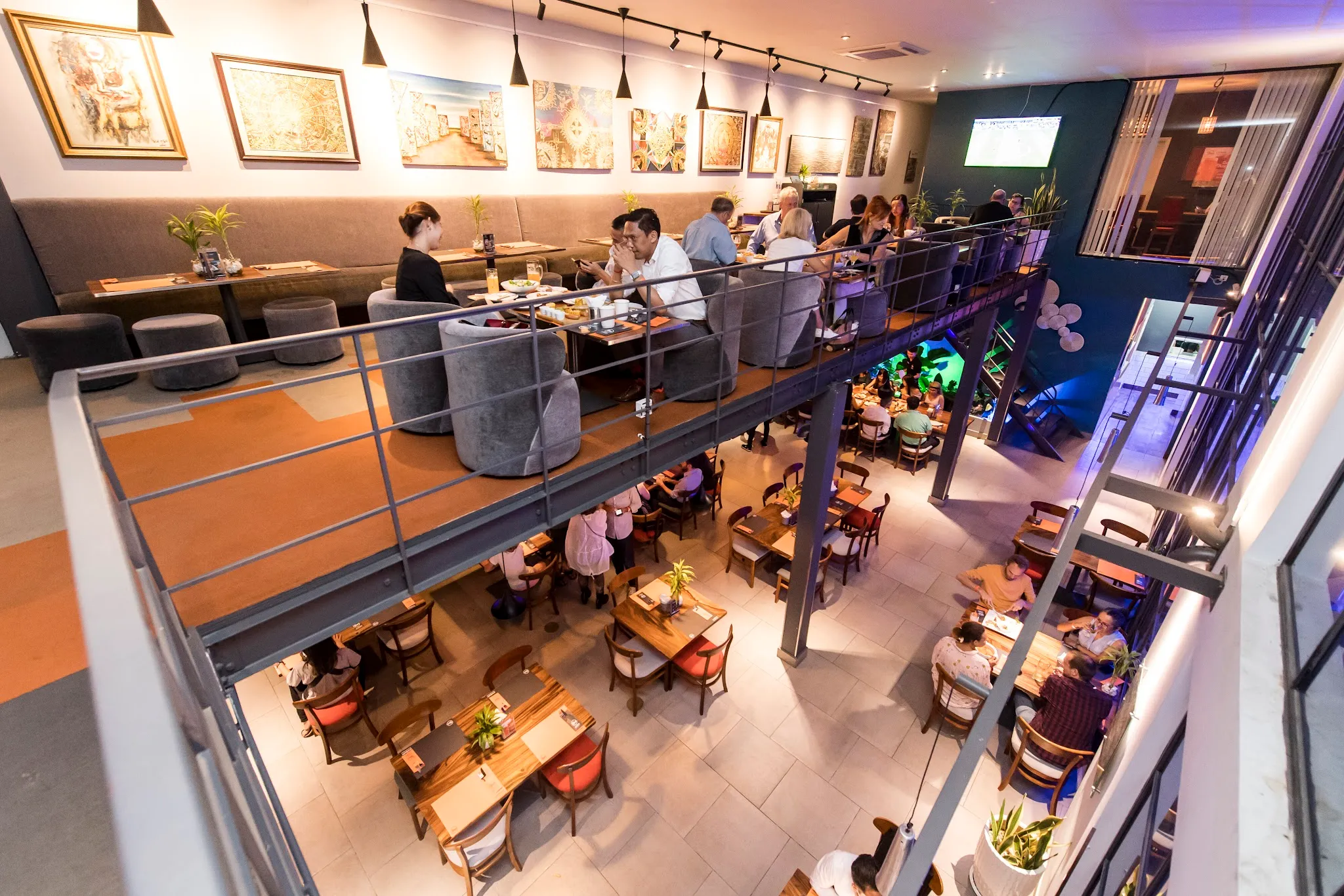
For something closer to the American craft tradition, Botanico Craft Beer Garden (9B Street 29) is the one to know. Owned by American brewers, Botanico brews its own Cerevisia-brand beers on site and pours them alongside other local craft in a lush, plant-heavy garden that ranks among the most pleasant places to drink in the city. It runs from morning coffee through to late, the food covers the reliable beer-garden ground of wings, sliders and sharing boards, and the greenery does the work that most Phnom Penh drinking spots skip entirely. It is a garden first and a brewpub second, which is exactly why it works.
Down near the Russian Market, Riel Brewing (Street 478) is one of the pioneers of the city's craft-ale wave, brewing since 2013 and distributing its ales, stouts and sours to venues across Phnom Penh, Siem Reap and Kampot. The brewery itself keeps limited hours, but the place to actually drink Riel's beer is its own open-air tap house next door, Noisy Chili (Street 478). The two operations sit on the same corner and are best understood as a pair: Riel makes the beer, Noisy Chili pours an always-rotating line-up of it in a garden that runs live music and comedy through the week. The Toasted Coconut Brown Ale and Grapefruit Pale Ale are the ones regulars steer newcomers toward.
Another local name worth knowing is Stone Head Brewery, whose beer has quietly become one of the more widely distributed Cambodian craft labels in the city. It has a taproom of its own, where you can drink the full range straight from source. Beyond that, its beer turns up all over the city: in bottles at Tacos Kokopelli, the Mexican kitchen in Daun Penh, on draught at the Welsh Consulate over in Toul Tom Poung, and at a growing list of other venues across town.
Down a back alley off Preah Sihanouk Boulevard, near Independence Monument, Flowers Nanobrewery is the smallest and most singular operation in the city: brewing since 2015, first in Kampot and now here, it is Cambodia's original nanobrewery. It is Japanese-run, and owner-brewer Yuki works at a scale where every batch can afford to be an experiment, turning out Belgian-inspired IPAs, a light porter, and one-off brews flavoured with Kampot pepper, dragon fruit and pineapple, poured fresh in an intimate room that seats only a handful. The twist is the kitchen, which is entirely plant-based: the taproom doubles as a vegan sushi bar serving maki rolls, vegan burgers and Japanese-style pancakes. It opens Tuesday to Friday evenings only, which suits a place this small. Nothing else in Phnom Penh drinks, or eats, quite like it.
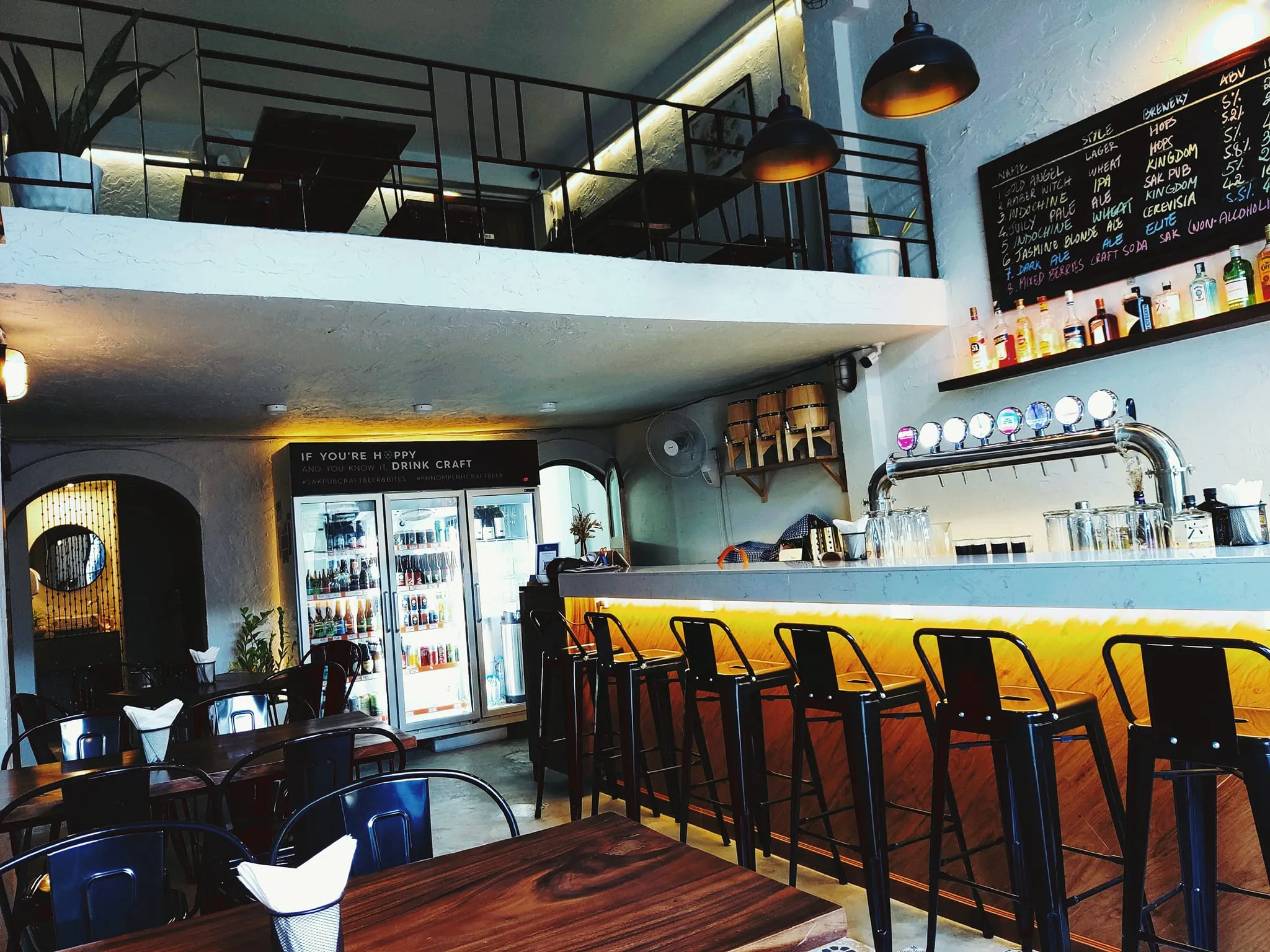
The most quietly significant address, though, might be Sak Pub Craft Beer & Bites (small alley behind Patio Hotel, off Street 51, BKK1). Sak is a Khmer-owned microbrewery, one of the few fully Cambodian-staffed craft beer venues in a scene that has largely been built by expats, and that alone earns it a visit. Up to a dozen Cambodian craft beers pour from the taps alongside imported bottles, the kitchen turns out pizzas and bar snacks, and the alley-behind-a-hotel location keeps it feeling like a find rather than a destination. It is proof that the craft scene is no longer something that happens to Phnom Penh from the outside.
Brewing With a River View
Two breweries earn their place as much for where they are as for what they pour. Himawari Microbrewery (313 Preah Sisowath Quay) brews small batches in the lobby of the Himawari Hotel, right on the riverfront, with the Mekong filling the windows. The house beers lean local and inventive: a Honey SAP sweet ale made with Tonle Sap honey, an osmanthus pilsner, a pink guava gose. A tasting flight and a happy hour that runs from four to six in the afternoon make it an easy place to work out what the brewery does before committing to a pint, and the river view does the rest.
For the full expedition, Black Bamboo Craft Brewery and Restaurant sits across the water on Koh Oknha Tey, the silk-weaving island a short ferry north of the city. Getting there is the point: you cross the Mekong, leave the traffic behind, and arrive at a tranquil garden brewery serving its own craft beers and homemade sodas alongside wood-fired pizzas and a Khmer-Western menu, with the Phnom Penh skyline going gold across the river at sunset. It keeps daytime-into-early-evening hours that vary by day, so it rewards a plan rather than a whim, but as a way to spend a slow afternoon it is hard to beat.
The Specialists
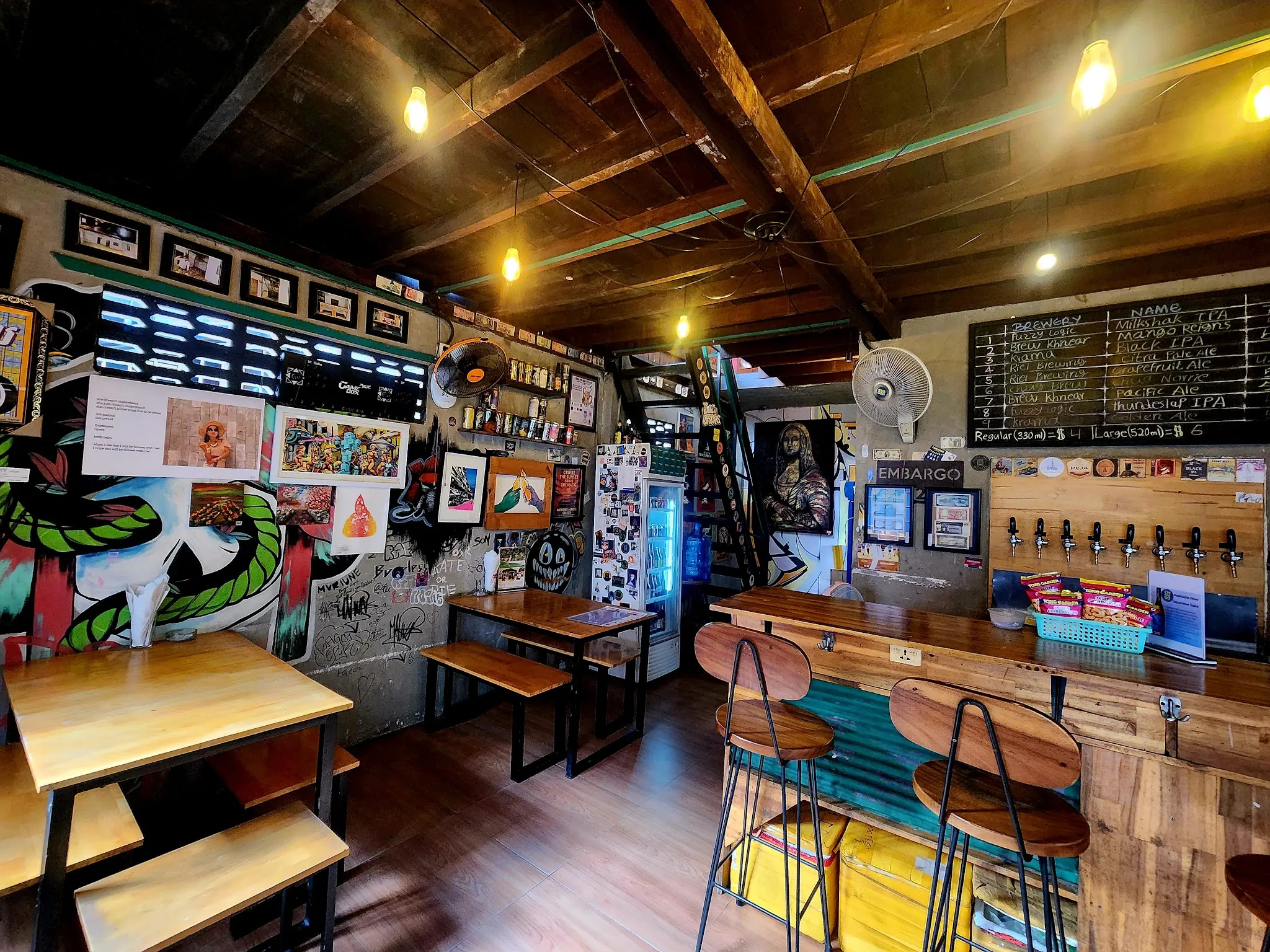
If the breweries are where the beer is made, Embargo Craft Beer (Langka Lane, off Street 51, BKK1) is where all of it comes together. Embargo does not brew. It curates, and it does so at a scale few in the city can match: more than forty-five different beer styles across tap and bottle, from IPAs and hazy NEIPAs to stouts and amber ales, drawn from both Cambodian and international breweries. Local labels sit next to imports from across the region, the staff actually know what they are pouring, and regular tap takeovers keep the wall changing. It opens at four in the afternoon and closes on Sundays. For anyone trying to understand the breadth of what is now available in Phnom Penh, this is the single best classroom.
Its natural counterpart is Box Office (8 Long Nget St / Street 258, near Wat Botum Park), which comes at the same job from the draught side. Where Embargo spreads its range across tap and bottle, Box Office concentrates on the taps, and pours what is arguably the largest bank of them in the city: craft beer from breweries across the country, on draught and rotating constantly. It has done this since 2014 as a British pub, craft beer bar, kitchen and live venue rolled into one, which means the beer arrives with proper pub food, a Sunday roast, pie and mash, fish and chips, and, more often than not, live music or comedy on in the room. It runs from early morning through to midnight, as good for a quiet daytime pint as for a full night out.
Beer From Somewhere Else
Not all the good beer in Phnom Penh is made here, and a handful of bars import whole drinking cultures rather than a single label. Duplex Belgian Tavern (3 Street 278) stocks more than thirty varieties of Belgian beer, including Duvel, Leffe, Kwak and several Trappist monastery ales, and it treats them seriously: the kitchen cooks with the beer, turning out a Belgian beef stew braised in Trappist ale, proper moules frites and a beer cheese board. It runs live music and salsa from Wednesday through Sunday and the kitchen stays open until three in the morning, which makes it one of the more forgiving late options in the city.
Out in Toul Tom Poung, the Welsh Consulate (180 Street 460) is the smaller sibling of the long-running Welsh Embassy, run by the same team and pouring Welsh beers on draught alongside bottled craft ales like a smiling evil pale ale and a chocolate stout. It is an unpretentious expat pub in the best sense, built around quiz nights, rugby on the screens and a genuine welcome, and its beer selection is a good deal more thoughtful than the sports-bar setting first suggests.
A Kitchen Behind the Bar
For drinkers who want the beer to arrive with something substantial, a few gastropubs put the food on equal footing. CARGO Gastropub (234 Street 146) anchors the Toul Kork end of the scene with a craft beer selection poured alongside gourmet burgers, crispy pork belly bites and a craft-beer-battered fish and chips, in a modern room that runs late every night. It is the kind of place that works equally well for a proper dinner or a long session, and the neighbourhood has quietly made it a regular.
In Toul Tom Poung, The Wok & Barrel (9 Street 460) takes its beer more seriously than most gastropubs bother to, pouring premium imports and Belgian beers both on tap and by the bottle: a draught Hoegaarden for around $2.75, an Erdinger dunkel weissbier, and a run of Belgian Trappist monastery ales. The food is an unusual double act of Western pub comfort food and American-style Cantonese wok dishes, served in front of the live sports, and the loaded animal fries and double-stack cheeseburger have their devotees. It is a gastropub with a sense of humour about itself, but the taps and the fridge are where it quietly overdelivers. And on the old Boeung Kak site, Smoke American BBQ & Craft Beer (1337 Street 1003) does exactly what its name promises: slow-smoked brisket, pulled pork and ribs straight from the smoker, with a craft beer selection built to stand up to a plate of barbecue. It is a newer, smaller operation, but the pairing of smoke and hops is a natural one, and it is a welcome addition to the northern end of the city.
Tips for Drinking Craft in Phnom Penh
Know the difference between brewers and pourers. Hops, Botanico, Riel, Flowers, Himawari, Sak Pub and Black Bamboo all brew their own beer on site. Embargo, by contrast, is the place to drink everyone else's. Both are worth your time, but they answer different questions.
Riel and Noisy Chili are one operation. If you are looking for Riel Brewing's beer near the Russian Market, head for Noisy Chili next door: the brewery keeps limited hours, but its open-air tap house is where the pints are actually poured.
Two branches of Hops, two experiences. Hops Central on Street 228 is the big, late-running BKK1 flagship. Hops Villa in Toul Kork is the quieter garden option. The beer is the same Bash Brewing range at both, so choose by mood and location.
Check the days. Several of the best spots keep particular hours. Embargo closes on Sundays and opens only from late afternoon; Black Bamboo runs daytime-into-evening hours that shift through the week and requires a ferry; Riel Brewing itself is evenings only. A quick check before you set out saves a wasted tuk-tuk.
Happy hour is worth timing. Himawari's four-to-six window and Botanico's happy-hour deals are the easiest ways to taste a brewery's full range without committing to a full round of each.
Phnom Penh's craft beer scene is still young, and that is most of its appeal. It is small enough that the brewers know each other, that a bar like Embargo can pour half the city's output from a single wall, and that a Khmer-owned microbrewery down an alley feels like part of the same conversation as a German beer garden, an American brewpub in a garden of ferns, and a Japanese nanobrewery pouring pineapple beer. You can spend a week working through toasted coconut ales, guava goses, a dragon-fruit one-off, Trappist monastery beers and a stout brewed within sight of the Mekong, and still not reach the bottom of it. For a city few people would think to visit for the beer, that is a remarkable amount of glass to get through.