Halal Restaurants in Phnom Penh: A Guide to Muslim-Friendly Dining
From the Pakistani kitchens strung along Sisowath Quay to a Javanese cook who once fed an ambassador, Phnom Penh's halal dining runs deeper than most visitors expect. Here is where to eat, tradition by tradition.
Halal food is not a niche concern in Phnom Penh, whatever first impressions might suggest. Cambodia has an indigenous Muslim population (the Cham, whose communities have lived along the country's rivers for centuries) and the capital carries that history in its kitchens. Layered over it is something more recent and more visible: a South Asian dining strip that has taken root along the riverfront, a scattering of Turkish and Lebanese grills, and a small but committed cluster of Malay and Indonesian cooks who arrived and stayed. The result is a halal scene with genuine range, if you know where to look for it.
The difficulty for a first-time visitor is that it does not announce itself in one place. There is no single halal quarter to walk. Instead the good eating is distributed by tradition (Pakistani biryani near the Royal Palace, Turkish charcoal on Street 51, a Kedah-born buffet near Central Market, Cambodian wok food out along Street 193) and the map only makes sense once you understand which community settled where. A little orientation goes a long way.
Here is how the city's halal dining breaks down, tradition by tradition, from the riverside South Asian strip to the everyday Cambodian kitchens that quietly cook to the same standard.
The Riverside South Asian Strip
The single densest run of halal restaurants in Phnom Penh sits along Preah Sisowath Quay, in the stretch between the Royal Palace and the National Museum. This is Pakistani and North Indian territory, kitchens that cater to South Asian Muslim travellers and residents, and that have clustered here precisely because the riverfront is where those travellers stay.
Lahore Punjab Restaurant & Hotel (Preah Sisowath Quay) is the anchor most regulars name first, a fully halal Pakistani and Punjabi kitchen a short walk from the Palace, cooking the North Indian and Pakistani canon without compromise. The chicken karahi arrives tomato-braised and slick with spice, the dal tarka comes tempered the way it should, and the seekh kebabs land with naan straight from the tandoor. It is the kind of room that fills with the people it was built for, which is the surest sign it is doing something right.
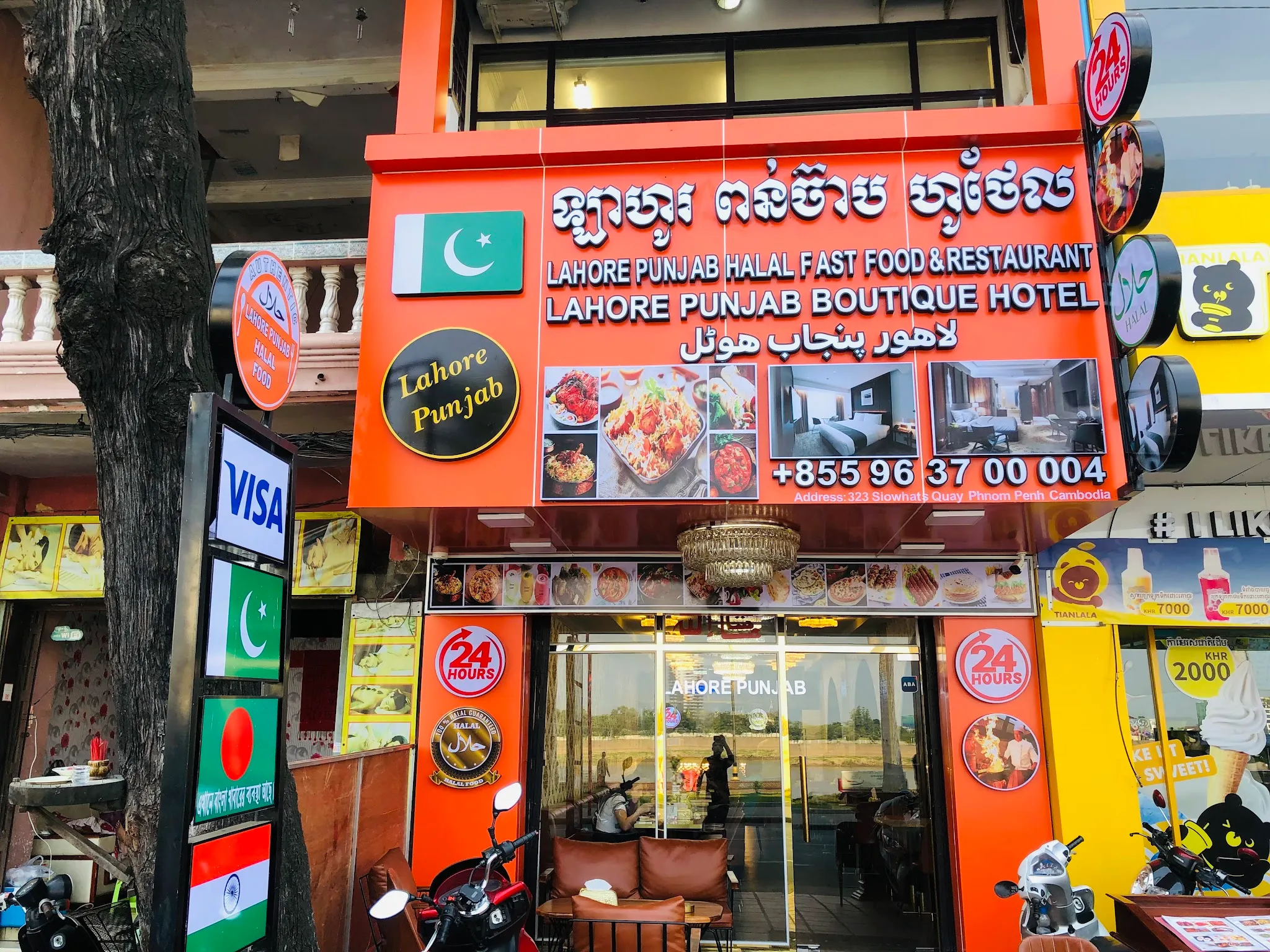
A few doors along, Mian Jee Restaurant & Hotel (169 Preah Sisowath Quay) runs a hundred-per-cent halal Pakistani kitchen around the clock, the mutton biryani and chicken karahi are the dishes to order, and the fact that it never closes makes it the answer to a very particular kind of late-night hunger. Marhaba Halal Restaurant (337 Preah Sisowath Quay) widens the net to take in Bangladeshi cooking alongside the Pakistani and Indian standards, with beef chapli kabab and lucha paratha among the reasons to stop. And Indian Royal Halal Food – King Palace (345 Preah Sisowath Quay) holds down the budget-to-mid end of the same strip, open twenty-four hours, with a vegetarian set meal that keeps the price sensible for anyone eating their way through the week.
The strip does not end at the river. Inland, Taj Mahal Restaurant (125 Street 136) has been cooking North Indian and Pakistani food from the same address since 1993, which makes it one of the longest-running South Asian kitchens in the city, three decades of home-style curries and tandoori, served around the clock. Indo Pak Halal Restaurant (63 Street 15) has built its reputation more quietly since 2018, with a chicken karahi and clay-oven tandoori that regulars rate among the best in this category. Nearby on the same street, Nazrul Restaurant (65 Street 15) leans Bangladeshi, cooking for the local South Asian community into the small hours.
For those further from the centre, the depth continues. Haveli Indian Restaurant (19 Street 282) has run an elegant halal-friendly room since 2017, with a butter chicken and biryani that anchor a menu built for both intimate dinners and larger gatherings. Mannat Indian Restaurant (78 Street 130) brings Mumbai-style street food and a long list of thali sets to the Daun Penh grid. And out in Toul Kork, Curry Pot (corner of Streets 313 and 528) folds Nepali dal bhat into its halal-certified Indian menu, a useful address in a part of the city that is otherwise thin on the ground for this kind of food.
Middle Eastern, Turkish and Lebanese
If South Asia owns the riverside, the Middle East has quietly colonised Street 51 and the streets around it. This is where the shawarma and the charcoal grill live, and the standard is higher than the casual, street-side format might lead you to expect.
Nur Grill (62 Street 51) is the one to know. The kitchen is run by Chef Omar, who bakes his flatbreads and pastries fresh each day and grills lamb and chicken kofta over charcoal to order, arayes, fatayer and a baklava made in-house round out a menu that treats Lebanese cooking as a craft rather than a takeaway convenience. A few steps away, Mr Shawarma 51 (54 Street 51) keeps things fast and focused: chicken and beef shawarma wraps, falafel, hummus, and a chicken liver wrap for the initiated, served late into the night.
Over in Daun Penh, MAMA TURK (56 Street 242) cooks classic Turkish and Lebanese dishes in a small, warm room (lamb kofta, baba ghanoush, hummus with flatbread) with the kind of owner-run hospitality that turns a first visit into a habit. For something more considered, Istanbul Restaurant (48 Street 123, Toul Tom Poung) works entirely with halal ingredients and cooks the fuller Turkish repertoire: fistikli kebab crusted in pistachio, lahmacun, pide, and a lentil soup to start.
The riverfront has its Mediterranean corner too. Olive & Olive Mediterranean Restaurant (101 Sisowath Quay) sends out complimentary puff bread on arrival and cooks Turkish-influenced grills, pizzas and pasta in generous portions with the river in view. Habibi SkyBar at Hummus House (111 Preah Sisowath Quay) takes the same Lebanese and Mediterranean menu (shawarma, mezze, grills, baklava) up onto a rooftop, trading street-level bustle for a view over the Tonle Sap.
For the doner and kebab end of things, Oliya's Kitchen (38 Street 135, Toul Tom Poung) slow-roasts its doner and hand-makes Central Asian pastries like samsa and cheburek, while King Doner & Kebab (7 Street 596) works the charcoal for Adana-style lule and iskender served over flatbread. And near the Russian Market, Taste of the Middle East (62E Street 446) keeps traditional Arabic floor-cushion seating alongside its tables, and runs a buffet on Saturday nights for those who want to graze rather than order.
Malay, Indonesian and the Wider Archipelago
The smallest of the city's halal traditions is also the most quietly rewarding, a handful of Malay, Indonesian and Singaporean cooks who brought their home kitchens with them, and whose provenance often explains everything about the food.
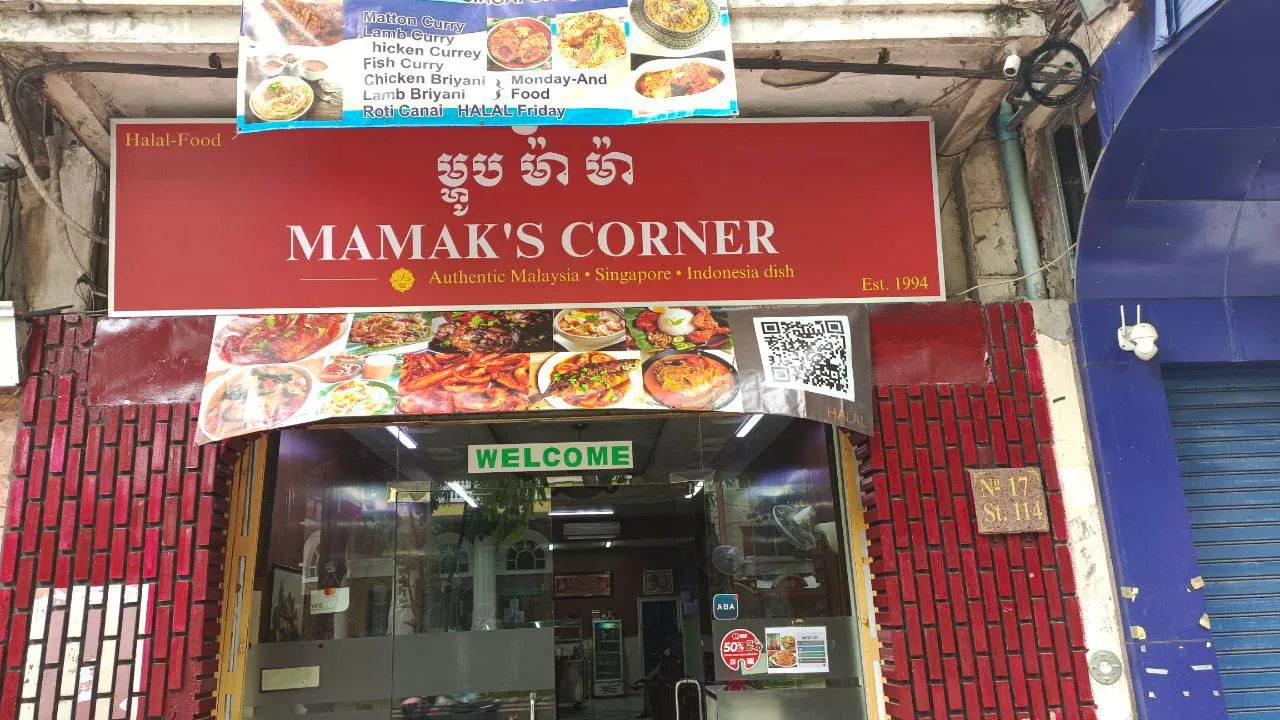
The pair to seek out both sit near Central Market and are both run by Kedah-born owners. Mamak's Corner (114 Street 17) is one of the oldest Malaysian halal restaurants in the city, run by a Kedah man and his Cambodian wife, with a rotating buffet that changes daily and lands at around six dollars a head, nasi lemak, roti canai, beef rendang and a proper teh tarik. Café Malaya (65 Street 118) works to the same model: five authentic Malaysian dishes prepared fresh each day, a lunch buffet at the same easy price, closed Sundays.
The best story in this section belongs to Warung Bali (25 Street 178), a long-running Indonesian kitchen run by a Javanese chef who once cooked for the Indonesian Ambassador, a pedigree that shows in the beef rendang, the gado-gado, and the Balinese spiced chicken, all sold at prices that barely climb above a dollar or two a dish. For West Sumatran cooking, Padang Nusantara (277G Preah Sisowath Quay) does proper nasi padang (steamed rice ringed with Minangkabau-style curries and slow-cooked dishes) on the riverfront.
The everyday Malay kitchens round out the picture. My Kampong Cafe (55 Street 105) cooks home-style nasi lemak and roti canai in Boeng Trabek; Habibi (Street 108, near the Night Market) does the same near the centre (not to be confused with the nearby Habibi Lounge, a separate venue a short walk away that trades under a similar name; and Halal Dulang Cafe & Restaurant (169F Street 154) keeps an air-conditioned room going for flavourful rice sets. For a slightly different register, HKB Restaurant (Street 334, BKK1) brings Klang-style bak kut teh and kopitiam cooking to the BKK1 crowd, and Mab Mab Singapore Halal Chicken Rice (Street 516) does Hainanese-style chicken rice to a halal standard) a dish that is genuinely hard to find done well and done halal in the same place.
Cambodian and Everyday Halal
It is easy to forget, amid all the imported cooking, that Cambodia has its own halal tradition, the food of the Cham and the wider Muslim community, cooked for people who eat this way every day rather than as a novelty. These kitchens are less polished and further from the tourist streets, and they are all the better for it.
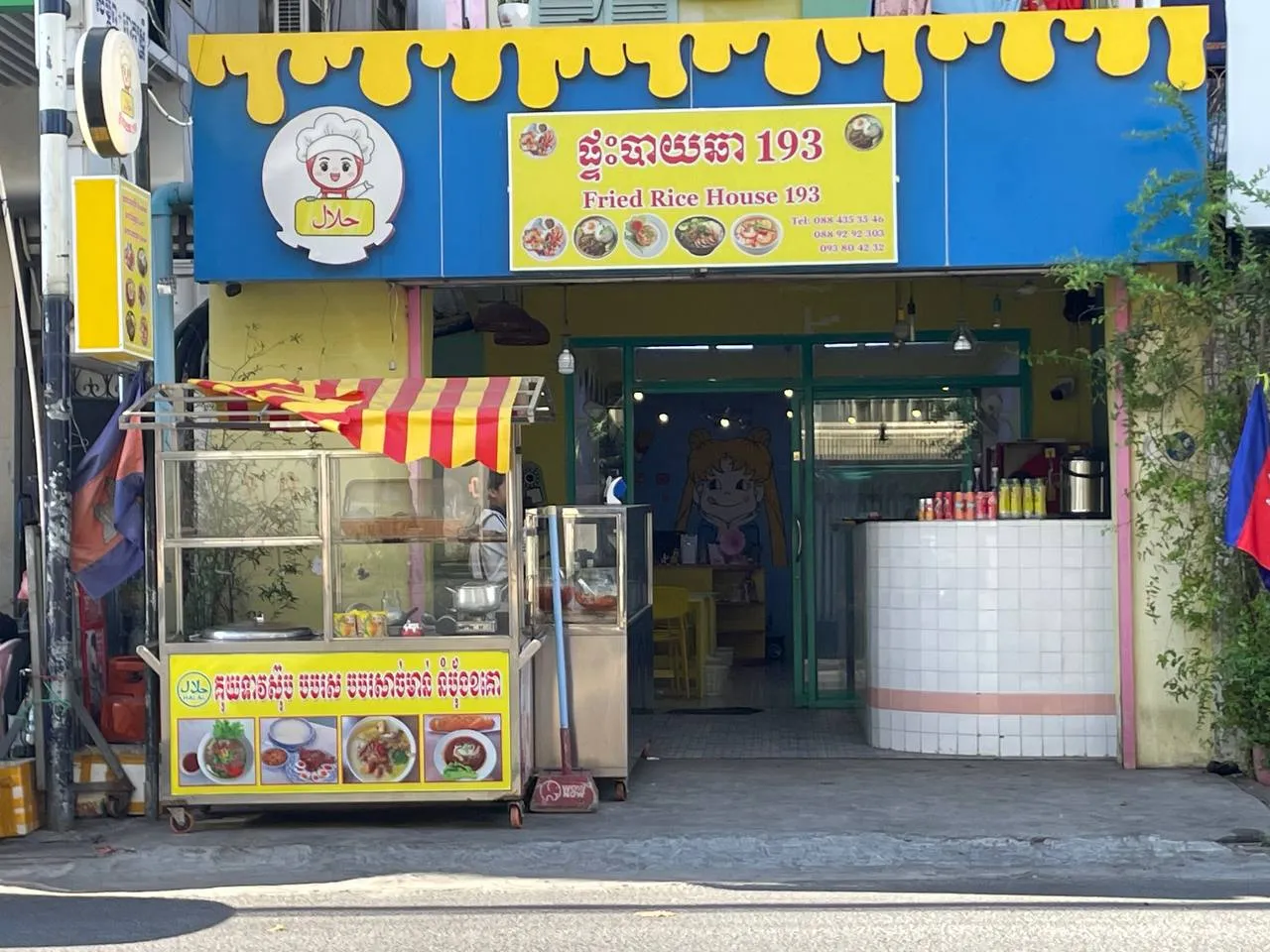
Halal Fried Rice House 193 (Street 193, Tuol Svay Prey) is the pick of them, a local wok kitchen turning out halal-certified Cambodian and Malay comfort food, with a house fried rice and a beef lok lak version that regulars order without looking at the menu. It is casual, affordable and entirely unbothered by anyone's expectations, which is exactly its appeal.
Further out, a small cluster of halal kitchens has grown up around the mosque on Street 86 (Moat Chrouk), in the older Muslim quarters north of the centre. Peace Guest House & Restaurant (Moat Chrouk, Street 86) cooks authentic Cambodian food to strict halal standards, with a buffet aimed squarely at Muslim families and travellers. And Saron Thai Food Halal (near the same mosque) handles the Thai and Khmer crossover (pad thai, green curry and tom yum all prepared halal) for a neighbourhood that expects nothing less. Out along National Road 5, the plainly named Halal Restaurant (1755 National Road 5) is worth the trip for anyone in the north of the city, cooking lort cha, fried rice and deep-fried tilapia to the same standard from early morning.
Tips for Eating Halal in Phnom Penh
Know where the clusters are. The three worth memorising are the South Asian strip on Sisowath Quay between the Royal Palace and the National Museum, the Middle Eastern run along Street 51, and the Cambodian and Bangladeshi kitchens near the mosque on Street 86 to the north. Almost everything else radiates out from these three.
"Certified" and "options" are not the same thing. Many restaurants in this guide are fully halal-certified kitchens; a few Indian and Turkish places offer halal options within a broader menu. If it matters to you, it is always worth a direct question at the counter, the staff at these venues are used to being asked and will tell you plainly.
A lot of it runs late. The South Asian riverside kitchens in particular keep unusual hours, several are open twenty-four hours, and Mr Shawarma 51 and Nazrul both run well past midnight. This makes the halal scene one of the more reliable options for a genuinely late meal in Phnom Penh.
Ramadan shifts everything. During the fasting month, opening hours across the Muslim-run venues change, often opening only after sunset and running late into the night. Check ahead rather than turning up at noon.
Cash still rules at the small places. The buffets, the wok kitchens and the street-side grills generally prefer cash, though most keep it cheap enough that it hardly matters. The larger riverside restaurants take card and ABA Pay. Many of the venues here also deliver through Foodpanda and Grab if the heat wins.
For a reliable fallback, the KFC branches at AEON Mall, Norodom and Monivong are halal-certified, not the point of a food guide, but useful to know when you are with people who want something familiar and fast.
Phnom Penh does not sell itself as a halal dining city, and that is part of why eating well here as a Muslim traveller feels like a small discovery rather than a packaged experience. The food is spread across the map, tied to the communities that cook it, and best found by following those threads (the Pakistani kitchens by the river, the Turkish grills off Street 51, a Kedah buffet near the market, a Javanese cook working from memory near Street 178. Put a day into moving between them and the city reveals a Muslim food culture that is older, deeper and more various than its reputation lets on) and considerably more delicious than the effort of finding it would suggest.
Browse every halal restaurant in Phnom Penh on BongNham, or walk the riverside strip in full with our guide to Riverside dining. Eating around the centre? The Daun Penh scene covers Central Market and Street 53, and our vegetarian and vegan guide is the companion for anyone eating meat-free alongside you. Planning a packed day? Follow our one-day Phnom Penh itinerary.