Top Chinese Restaurants in Phnom Penh: Dumplings, Hot Pot & Dim Sum
Phnom Penh's Chinese dining scene runs deeper than most visitors realise: from handmade dumplings on a quiet shophouse street to award-winning dim sum above the Mekong. Here is where the city's Chinese community actually eats.
The relationship between Phnom Penh and Chinese cuisine is not a recent development. The Sino-Khmer community has been part of this city's fabric for generations, and the restaurants that serve it have evolved across several distinct registers: the neighbourhood canteen that has fed families for decades, the hot pot chain that now has five addresses across the city, the rooftop dim sum room that has won awards. What has changed in recent years is the arrival of a newer wave: mainland Chinese restaurants bringing Sichuan heat and Cantonese craft to a city that increasingly has the appetite for both.
The result is a dining landscape that rewards specificity. Not every Chinese restaurant in Phnom Penh is doing the same thing. The cuisine here is genuinely diverse (Cantonese, Sichuanese, Shanghainese, home-style northern cooking) and choosing well means knowing what you are looking for. This guide is organised by what the kitchen actually does best.
Here is where to eat Chinese food in Phnom Penh, from morning dim sum to a midnight bowl of noodles.
Dumplings & Noodles
The simplest test of any Chinese kitchen is what it does with dough and filling. Three addresses in Phnom Penh pass that test better than any others.
Dumpling Empire Vanda (12 Street 183, Phnom Penh) has built the most devoted following of any dumpling specialist in the city: three hundred and eighty-one reviews at 4.9 stars is not an accident, and it is not the product of tourist traffic. This is a restaurant that the Chinese community in Phnom Penh comes back to repeatedly, which is the only review that matters. The dumplings are handmade, the skins are thin, the fillings are generous (pork and cabbage, beef, egg and vegetable) and the hand-pulled noodles are the right vehicle for a broth that takes its job seriously. Combo sets make the economics straightforward. Open daily from ten in the morning until ten at night.
Mama Wong's Dumpling and Noodle House (Street 308, Sangkat Chaktomok) occupies a different register entirely: the address is Bassac Lane, the MSG-free commitment is stated explicitly, and the menu sits comfortably in Phnom Penh's top sixty restaurants by verified review volume. Nearly a thousand reviews at 4.4 stars across a format that blends traditional Chinese technique with modern Phnom Penh sensibilities. The duck and sweet potato dumplings are the signature departure from the conventional, and the Taiwanese-style beef noodle soup has its own loyal constituency. Open until three-thirty in the morning on weekends, which makes it unusually useful.
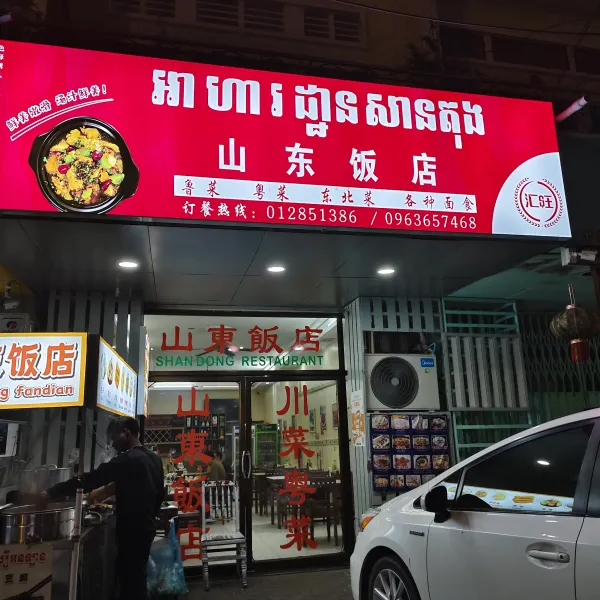
Shan Dong Restaurant has been slamming out hand-pulled noodles and top-class dumplings from the same spot behind Central Market since before this intrepid reporter arrived in 2002. The vibe is distinctly Chinese, as are the majority of the customers, reassuring if you have not been eating there the past twenty-five years!
Hot Pot
Hot pot culture has taken hold in Phnom Penh with considerable force, and three kitchens have emerged as the serious addresses.
Soup Cha (Street 278, BKK1) runs a format that distinguishes itself through a specific technique: ingredients are fried before the soup base is added, a method that builds a depth of flavour most hot pot rooms skip. At 4.9 stars across one hundred and twenty-three reviews it is the highest-rated hot pot address in the city, and the clientele is predominantly local Chinese, always the most reliable signal of credibility. The mala broth and the herbal option represent genuinely different experiences; this is not a kitchen that makes one soup and calls it variety.
Xiao Long Kan (Street 51, BKK1) is the outpost of a Sichuan chain that began in Chengdu in 2014 and has expanded across Asia. The Phnom Penh flagship brings the full format: numbing-spicy mala broth, wagyu beef, handmade fish balls, a coconut jelly dessert served in the shell at the end of the meal. It opens at eleven in the morning and runs until three in the morning, which reflects both who it is serving and the particular appetite of the Chinese community in this city for late-night eating. The vegan hot pot option is genuinely accommodated rather than an afterthought.
Kungfu Kitchen (家常便饭) deserves separate acknowledgement as Phnom Penh's most consistent chain: the Toul Tom Poung branch at 54E Street 454 has one thousand one hundred and ninety-four reviews at 4.7 stars, which makes it one of the most reviewed Chinese restaurants in the country. The name translates roughly as "home-style everyday food," and that is exactly the register: mapo tofu, kung pao chicken, braised pork belly with egg, hot pot sets at prices that make it the obvious choice for a group that cannot agree on a format. Branches in Aeon Mall, Daun Penh, and the Raintree building on Street 110 mean there is rarely a part of the city where it is not the sensible option.
Cantonese: Dim Sum & Roast Meats
Cantonese cooking is the oldest and most deeply rooted Chinese tradition in Phnom Penh, and the city has three addresses that understand it well.
Emperors of China (19 Street 163, Makara) has been operating since 2008, which in Phnom Penh's dining landscape is a form of institutional status. The kitchen runs breakfast and lunch only, which is the correct rhythm for dim sum: this is not an evening destination. Master Dim Sum Chef Lu Shichang has been at the pass since 2012, bringing more than thirty years of experience to a format that demands both precision and speed. The handcrafted dim sum, Peking duck, and handmade noodles in double-boiled broth are the reasons regulars arrive before nine in the morning. It closes at two in the afternoon and means it.
Zhan Liang Chinese Restaurant (Basement, Vattanac Capital Mall, Monivong Boulevard) is the upmarket Cantonese address for occasions that call for one: the setting is the basement of Vattanac Capital, the interior features a roasting station as its centrepiece, and the kitchen spans Cantonese, Sichuanese, and northern Chinese traditions within a single menu. The crispy pork, char siu bao, and Shanghainese xiao long bao are the benchmarks worth ordering first.
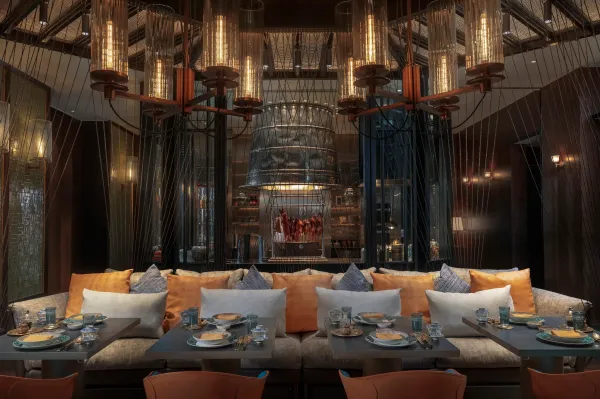
Hong Bao at TRIBE Phnom Penh (Preah Sisowath Quay) brings dim sum to the riverfront in a format that adds panoramic views to the equation. Daily chef-crafted dim sum (har gow, siu mai, golden salted egg creamy bun) alongside a full Cantonese menu that runs until three in the morning on weekends. The waterfront setting is genuinely dramatic, and the bar programme means it functions as much as an evening destination as a lunch one.
For roast meats specifically, Duck Kingdom Cambodia (Ground Floor, Raintree, 299 Preah Ang Duong) focuses on what its name announces: Hong Kong-style roasted duck, char siu pork, and crispy pork over rice or noodles, served from a kitchen that sources with a specificity the format usually does not demand. The three-meat platter is the honest way to take stock of what the kitchen can do.
Sichuan
Chilli Loves Sichuan Pepper (68 Street 57, BKK1) is the address for anyone who wants to test Phnom Penh's mala credentials without resorting to a chain. The kitchen on Street 57 brings genuine Sichuan technique: spicy fish head with Sichuan peppers, dry pot spareribs with shrimp, duck head braised in mala sauce, a menu that is not softening its edges for a foreign palate. The split hours (morning through early afternoon and then evening into midnight) mirror the rhythm of a Sichuan canteen. One hundred and twenty-six reviews at 4.4 stars from a restaurant that has no interest in being anything other than what it is.
Late Night & Neighbourhood
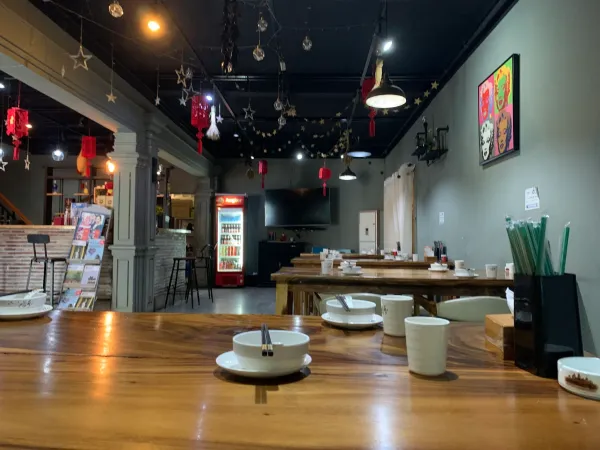
Chu Xiangge Restaurant (Phnom Penh) is the city's answer to the kind of Chinese-Cambodian neighbourhood eatery that keeps its own hours and its own clientele. Opening at half past four in the afternoon and running until four in the morning, the kitchen covers barbecue skewers, steamed fish, and the casual wok cooking that defines the Chinese-Cambodian fusion that is particular to this city. It is a family-run operation with the direct, unpretentious quality that comes from never having tried to be anything else.
For something quieter and more unusual, the Chinese Vegetarian Restaurant (75A Street 225), known in Chinese as 中信蔬食館, runs an entirely plant-based Taiwanese-influenced menu from a modest address in a part of the city most visitors do not find. Dumpling noodle soup, mock meat rice dishes, fried Chinese noodles: a full Chinese kitchen rendered without a gram of meat, and done with the kind of care that earns a five-star rating across seventy reviews. It opens at half past eight in the morning.
The Special Occasion Address
Hall of Golden Chimes (Level 5, NagaWorld2 Park, Samdech Hun Sen Street) is the address for occasions that call for something more ceremonious. An award-winning Cantonese restaurant on the fifth floor of NagaWorld2, with panoramic views over the Mekong and a kitchen that has earned its reputation through handmade dim sum, Cantonese roast meats, and a live seafood programme that extends to a full all-you-can-eat dim sum buffet on weekend mornings. The pandan swan puffs are the detail that separates a kitchen taking its craft seriously from one that is not.
Tips for Eating Chinese in Phnom Penh
Go where the Chinese community goes. The most reliable signal of quality in this cuisine is the clientele. Dumpling Empire, Soup Cha, and Kungfu Kitchen all draw primarily from Phnom Penh's Chinese community. That is not a coincidence.
Hot pot is an evening format. The serious hot pot rooms (Xiao Long Kan, Soup Cha, Kungfu Kitchen) open at lunch but do their best work from six in the evening onwards, when the groups arrive and the tables fill.
Dim sum is a morning commitment. Emperors of China closes at two in the afternoon. Hall of Golden Chimes does its all-you-can-eat dim sum on weekends from eleven. Arriving late is the main way to undermine both experiences.
Budget. Most of the restaurants on this list sit at the $$ price level: generous portions at twelve to twenty dollars per person. Zhan Liang and Hall of Golden Chimes are the exceptions where the occasion warrants the higher spend.
Phnom Penh's Chinese restaurant scene is not one thing. It is Sichuan heat on Street 57, a Cantonese dim sum kitchen that has been running since 2008, a dumpling specialist on a quiet shophouse street that a thousand regulars have quietly made their own. The cuisine here is diverse enough that eating well within it requires no repetition. The city rewards the specificity.
Explore all Chinese restaurants in Phnom Penh on BongNham