BKK1 Restaurant Guide: Where to Eat in Boeng Keng Kang
BKK1 is the neighbourhood Phnom Penh visitors spend the most time in and know the least about. Past the coffee shops and the boutique hotels, it holds the city's deepest Japanese dining scene, a Langka Lane of speakeasy cocktail bars, four rooftop rooms above the skyline, and whisky bars that pour until three in the morning.
BKK1, short for Boeng Keng Kang 1, is the neighbourhood that carries the highest density of restaurants in Phnom Penh while remaining the one most visitors leave having only scratched the surface of. They find the coffee shops, which have their own guide. They find the obvious terrace on Street 63. They miss the yakitori counter on Street 278, the mixed rice kitchen on Street 294, and the whisky bar on Street 306 that keeps pouring until three in the morning.
The neighbourhood is bounded by Norodom Boulevard to the west and Monivong to the east, Sihanouk Boulevard to the north and Mao Tse Toung Boulevard to the south, with Streets 51 and 63 running north to south through its centre. Most of the addresses in this guide sit within a ten-minute walk of one of those two arteries, which makes BKK1 the most walkable dining neighbourhood in the city once the heat drops after five.
Breakfast Options BKK1
Four addresses carry the neighbourhood's morning, and no two of them are doing the same thing: Shanghai steamed buns from half six, a French bakery, a Cambodian mixed rice counter, and Hong Kong dim sum.
The earliest start is at Shanghai Steamed Buns (Street 310), which opens at half six and stays focused on one thing: traditional Shanghai-style steamed dim sum and buns, made fresh through the morning. It is cheap, fast, and the kind of address that earns its following among people who live nearby rather than people who are passing through.
At the Parisian end of the same street, Eric Kayser (219 Street 63) is the BKK1 outpost of the international artisan bakery founded by the French master baker of the same name, open from seven with croissants, viennoiserie, and sandwich breads that hold their own against any bakery in the neighbourhood. It runs until nine in the evening, which gives it a longer working day than anything else on this list, but it earns its place in the morning before the heat arrives.
For a bakery with less polish and more of a local following, Bagel & Bakery Panya, still known around the neighbourhood by its old name Mamabanana, bakes fresh bagels and a rotating pastry counter that regulars work through steadily across the morning. It is the smaller, quieter operation of the two, which is most of the appeal.
For something entirely local, BKK1 Mixed Rice (27AB Street 294) is the neighbourhood's Cambodian morning option and one of its more interesting ones: a mixed rice kitchen where dishes are laid out buffet-style in trays and you take your pick, paying per portion. The menu has a Malay-Cambodian character that sets it apart from a standard bai chha counter, running Chinese-style braised pork, pork with century egg, and deep-fried chicken alongside nasi lemak and a Malay-style chicken drumstick with house spices. It opens at nine and closes Sundays.
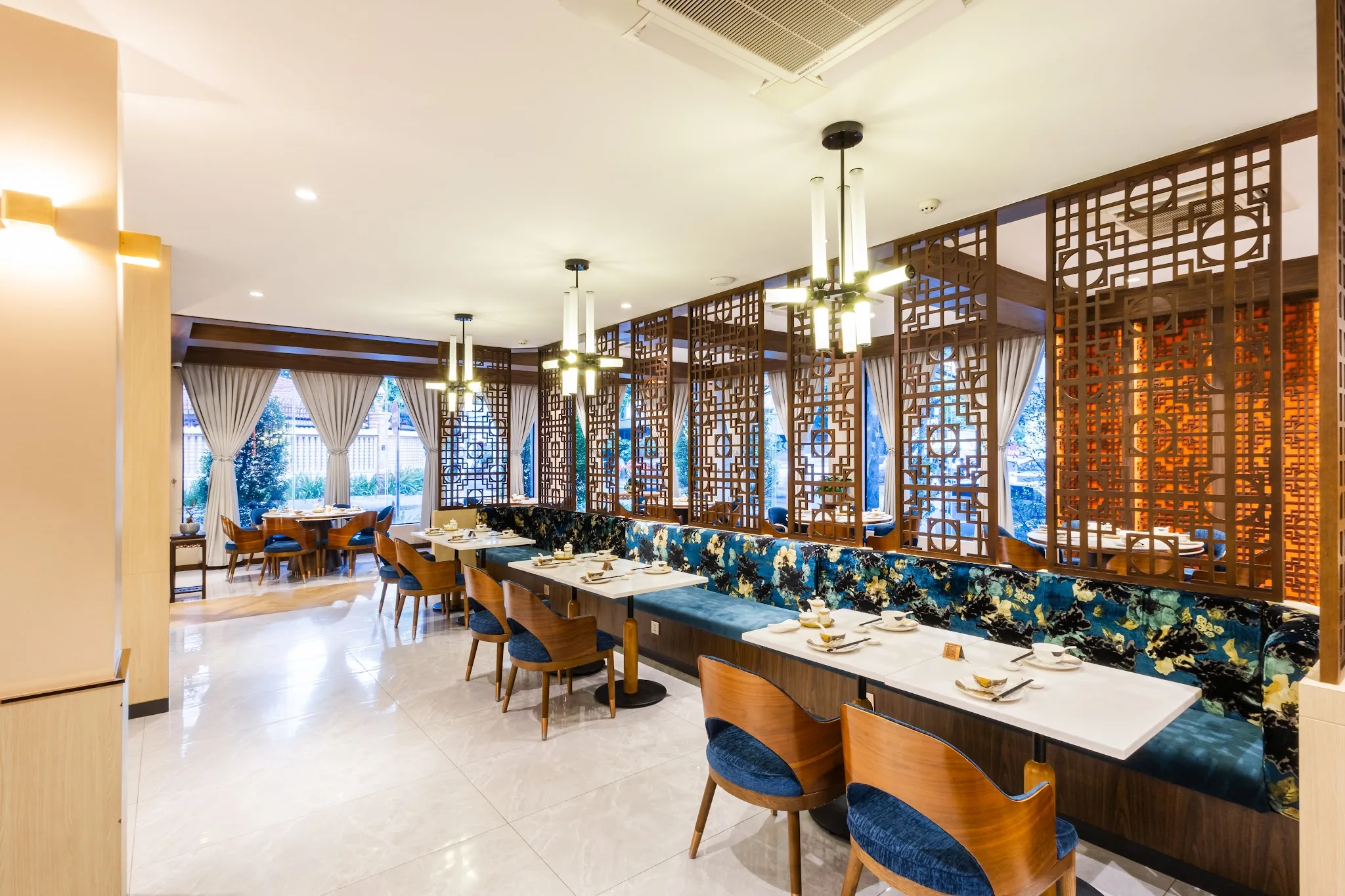
For something more substantial, Crystal Jade (corner Streets 57 and 310) is the BKK1 branch of the Michelin-recognised Cantonese dining group, serving Hong Kong-style dim sum from eight in the morning alongside a full Cantonese menu. The dim sum service runs until three, after which the kitchen switches to dinner. It is one of the few addresses in BKK1 where breakfast is genuinely the best meal of the day.
Street 63 and Its Neighbours
The day's main action starts on Street 63, where the stretch between Street 278 and Street 302 holds more options per hundred metres than anywhere else in the neighbourhood.
Marugame Udon BKK (189 Street 63) is the Japanese chain's BKK1 outpost, open from eight in the morning and built around fresh-made thick udon noodles with made-to-order tempura toppings. It is the neighbourhood's most practical lunch, fast enough that you are in and out in twenty minutes, and honest enough that you want to come back.
For something that takes considerably longer and benefits from it, Digby's (197 Street 63) has been on this corner long enough to have outlasted several waves of competition, serving steaks, club sandwiches, full breakfasts and homemade beef rib soup with the easy confidence of a place that stopped worrying about trends years ago. It opens at half ten on weekdays, at half seven on weekends for the brunch crowd, and closes Mondays.
At the corner of Streets 63 and 310, Dian Xiao Er brings the Singaporean franchise's signature herbal roast duck to Phnom Penh, the bird infused with Angelica and Ten Wonder Herbs and carved tableside, alongside a proper Singaporean-Chinese menu of bak kut teh, char siew and claypot fish curry. It is open from seven in the morning to half ten at night, which makes it as useful for breakfast dim sum as for dinner.
On Street 51, GēGē Kitchen (Rue Pasteur) runs Chinese hotpot alongside a modern Chinese menu of mapo tofu, dan dan noodles and kung pao chicken, from a kitchen with a following across the Chinese-Cambodian community that predates most of the neighbourhood's international attention. Open from eleven until ten.
Langka Lane
Langka Lane runs off Street 51 as a short residential alley, and it has quietly become the neighbourhood's most concentrated stretch of specialist drinking, with enough personality to anchor an evening on its own.
Katanashi (Street 51, BKK1) is a Japanese izakaya tapas bar with a hint of Mediterranean fusion, where small plates run between two and five dollars and the room fills nightly with Japanese regulars, which is the most useful shorthand for its authenticity. Gyoza, sashimi tapas, karaage, okonomiyaki and edamame cover the menu from half four until half eleven daily. Book ahead: it is small and the word has been out for a while.
The Garrison (47 Rue Pasteur, Langka Lane) is a speakeasy-style cocktail bar modelled on the fictional Garrison Pub from Peaky Blinders, which is either a reason to go or a reason to go in spite of it depending on your tolerance for themed bars. The house Garrison Sling, the negroni variations and the local Cambodian spirits cocktails are well enough made that the concept becomes enjoyable after the first one. Open from six in the evening until one in the morning daily.
Garage Sale (22Z Street 51) is a vintage American-themed cocktail bar and kitchen tucked in a soi off Pasteur, decorated with licence plates and eighties and nineties Americana, serving US comfort food alongside renowned smash burgers and an unusually broad range of vegan options. Open from five until midnight Monday to Saturday, from noon on Sundays.
A few doors down, Embargo Craft Beer is the lane's beer specialist, pouring from a rotating list that runs past forty-five styles across IPAs, stouts and sours. It is where the neighbourhood's more committed beer drinkers end up; our craft beer guide covers the breweries and taprooms across the rest of the city.
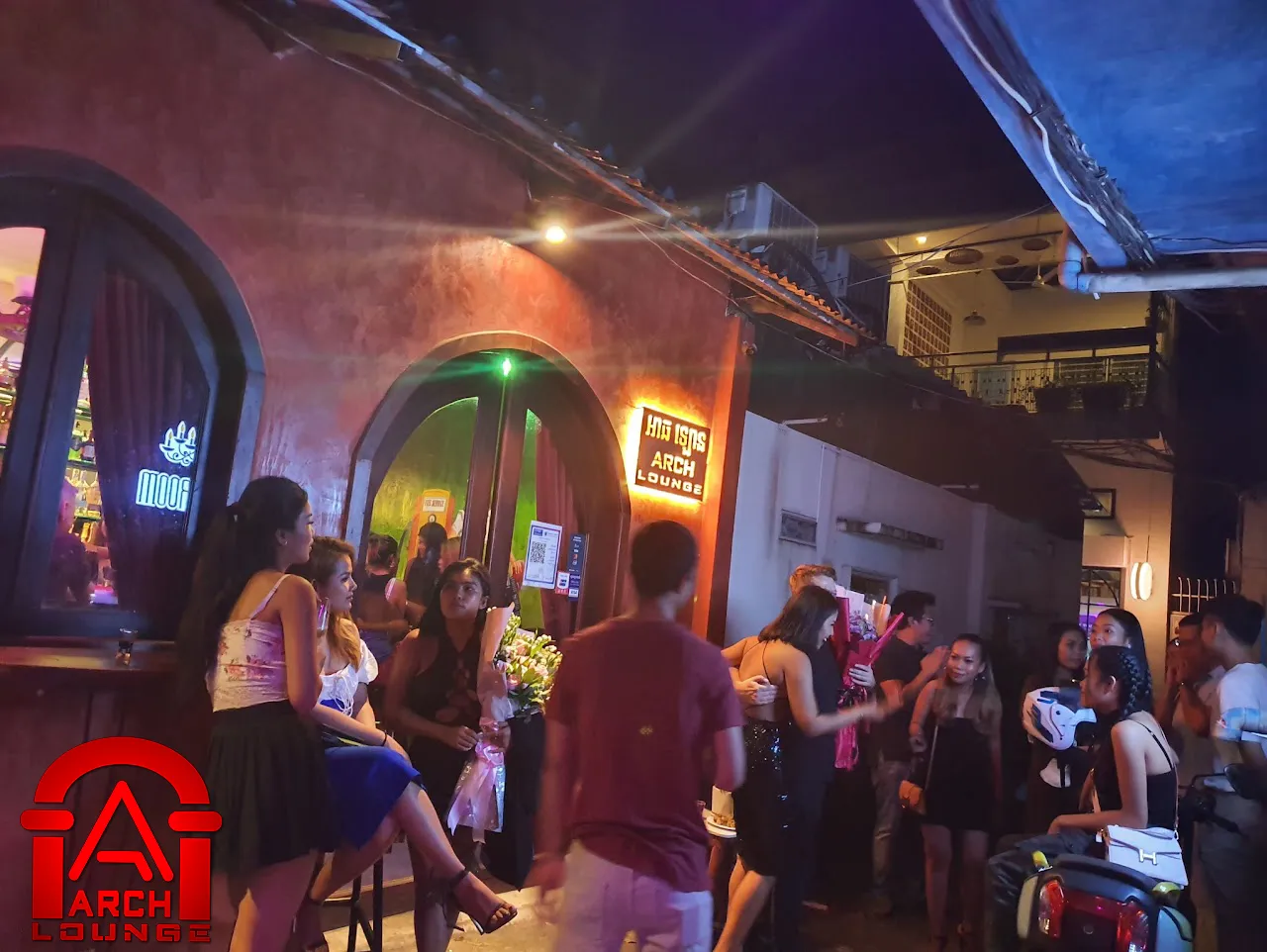
Around the corner, ARCH Lounge (23B Street 51, Langka Lane) is the cocktail option for people who do not want to spend a fortune on one: five-dollar cocktails, two-fifty beers, and a whisky night on Thursdays in an intimate bar that runs from six in the evening until two in the morning most nights.
The Japanese Quarter
BKK1 holds the densest concentration of Japanese restaurants in Phnom Penh, and the cooking across them is genuinely varied rather than interchangeable.
Ebinosekai Cambodia (235D Street 63) is the neighbourhood's most serious Japanese kitchen, built around fresh shrimp, as its name advertises, with omakase menus and à la carte options that include sea urchin, shrimp boat and a bento programme at lunch. It runs two sittings: lunch until two and dinner from five until half ten.
On Street 278, Jidaiya Yakitori (17 Street 278) is a charcoal yakitori and kushikatsu bar with a long-established following, grilling chicken thigh, scallion, gizzard and pork rib alongside okonomiyaki and rice bowls in a relaxed izakaya setting that runs until midnight. It is lunch and dinner, with a two to five gap in between.
Sushi Honda (24 Street 57) pitches itself as the neighbourhood's accessible sushi address: proper nigiri, sashimi, dragon rolls and ramen at price points that make regular visits possible rather than occasional. It splits into a lunch and a dinner service.
At the premium end of the same spectrum, HARU SUSHI (Street 278) is the neighbourhood's high-end Japanese seafood address, running grilled eel, salmon sushi and a curated omakase programme in a room that suits a special occasion as well as a deliberate dinner.
Oyakata (Street 57) is the sashimi room the regulars tend to keep to themselves: small, unhurried, and built around fish handled by someone who has been doing it a long time. Tamaya Japanese Dining & Bar (Street 288) works in the other direction, blending imported Japanese seafood with Cambodian ingredients across ramen, sushi and a sake list worth asking about.
That is the BKK1 contingent, and it is not the whole of it: the Seigendo group's seafood tavern and eight-seat omakase counter on Street 51, the eel specialist on Street 306, the Toyosu-sourced counters at the top of the market. Our guide to Japanese restaurants in Phnom Penh works through them address by address.
Korean BKK1
The Korean dining scene in BKK1 is spread across several streets and registers, from charcoal BBQ to home-style kitchens.
DOSEGI Korean BBQ (51 Street 302) runs charcoal tabletop grills with six complimentary banchan per two diners, well-marinated beef, samgyeopsal and a gamjatang so large it doubles as a main for the table. It runs eleven until midnight daily.
Bornga (Street 352, BKK1) is the home-style Korean kitchen on the strip, known for its haemul pajeon, dolsot bibimbap and samgyetang, the whole chicken ginseng soup that earns its own following in a menu built around Korean comfort rather than Korean spectacle.
For something at a fraction of the price, Bap & Kimchi (Street 278) is the no-frills option: shin ramen, kimchi fried rice, kimbap and tteokbokki at prices that undercut most of the city's Korean competition. It opens at ten and runs to ten, seven days a week.
Those three cover the everyday end of it. The premium Seoul imports on Streets 288, 306 and 352, the charcoal houses and the pocha bars still pouring past midnight all sit inside the same few blocks — our guides to Korean BBQ in Phnom Penh and the wider Korean scene cover those properly.
The Khmer Kitchens in the Middle of It
BKK1 reads as a neighbourhood of imported cuisines, which makes it easy to miss that two of the city's better-known Khmer kitchens are sitting inside it.
Eleven One Kitchen (20 Street 334) cooks traditional Cambodian food without MSG, using herbs and vegetables grown in its own rooftop garden, and serves it in a bright indoor-garden room that has become one of the easier introductions to Khmer cooking for anyone arriving without a reference point.
Tucked into Langka Lane off Street 51, HoubHoub is the quieter version of the same idea: a small, welcoming room doing amok, lok lak and fish and rice with care and no ceremony. For the dishes themselves rather than the addresses, our Cambodian food guide goes through them one by one.
Chinese, Sichuan and the Hotpot Table
Beyond the dim sum at Crystal Jade and the herbal roast duck at Dian Xiao Er, BKK1 carries a Chinese scene that leans toward the communal table.
Tian Mimi (Chip Mong Noro Lane, off Norodom Boulevard) does modern Sichuan from a room built on a deliberate split: a calm cafe through the day that turns into one of the neighbourhood's livelier dinner rooms after dark.
WE HOT POT (Street 360) runs individual hotpot sets against a wall of broth bases, from an aromatic satay through to a Taiwanese stinky-tofu broth for anyone who wants it, which means nobody at the table has to negotiate over the soup.
BKK1 is only part of the picture here. The mala specialists on Streets 51, 57 and 278 make this one of the city's stronger Sichuan and hotpot districts, and our guide to Chinese restaurants in Phnom Penh covers them.
Italian, Mexican, and the Wood-Fired Argument
BKK1 makes a credible argument for being the best neighbourhood in Phnom Penh for Italian food, with two distinct registers that rarely overlap.
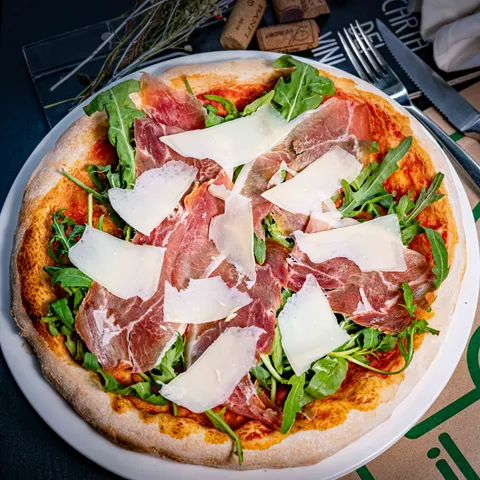
Il Forno (11 Street 302) has been making its case for ten years from a family-owned kitchen on Street 302, with wood-fired pizza, hand-cut fresh pasta and Italian cold cuts that reflect a kitchen cooking from its own tradition rather than approximating one. It runs from noon until half ten.
Green Pepper (174 Street 370) makes the same argument from the opposite end of the register: fine dining Italian with live piano, a wine list curated with genuine ambition, and a Neapolitan wood-fired pizza that sits alongside classic antipasti and pasta in a room that earns the occasion. Closed Mondays; dinner from Thursday to Saturday, lunch and dinner on Sundays.
Pizza 4P's BKK1 (10 Street 360) is the Vietnamese chain that has become BKK1's most talked-about pizza address, making its own mozzarella and burrata in-house and blending Italian technique with Southeast Asian flavour in ways that read as genuine rather than gimmicky. Open from eleven until eleven daily. For the wood-fired argument across the rest of the city, our pizza guide covers the specialists, the chains and the late-night slice.
For Mexican, Itacate (6B Street 302) is the serious option: fajitas, burritos, enchiladas, chimichanga and mezcal cocktails in a lively room that stays open until ten or eleven depending on the night.
Indian and the Subcontinental Corner
BKK1's Indian and Nepalese scene is concentrated on the Streets 294 and 310 corridor, and it is one of the most underappreciated in the neighbourhood.
Old Durbar Restaurant BKK1 (63 Street 294) specialises in Himalayan cooking: handcrafted momos, tandoori grills, sel roti and a chicken biryani that has earned its reputation. It opens at ten in the morning and runs until midnight, seven days a week.
Coriander Indian (200B Street 310, corner Street 63) covers the Indian and Nepalese canon at the accessible end of the price range: dal makhani, butter naan, kadai paneer and chicken tikka masala from a kitchen that has built its following on reliability rather than novelty. Open from ten until eleven daily.
Boma (132 Street 51) is not Indian but earns a place in the same conversation about cuisines that BKK1 does well. The Lebanese and Mediterranean menu is built around sharing plates and mezze, baba ganoush, mixed meat platters, tabbouleh and a feta cream cheese with honey that appears at almost every table. Lunch and dinner, closed Sundays.
Nearby, HKB Restaurant (Street 334) covers the Malaysian end of the same instinct, with Klang-style bak kut teh and the kopitiam classics that go with it.
Above the City: The Rooftops
BKK1's height gives it a rooftop scene that no other Phnom Penh neighbourhood can match, and three of the city's best high-level rooms sit within a short walk of each other.
Above Eleven Phnom Penh (28th Floor, Novotel BKK1, corner Streets 51 and 294) is the Peruvian-Japanese fusion bar that has made the most of its hundred-metre elevation, building a Pisco Sour and Nikkei ceviche programme with nightly DJ sets in a room that looks out over the city in three directions. Open from five in the afternoon until one in the morning.
Sharing the same tower, Makila Restaurant (Novotel BKK1) anchors the Basque and Spanish end of the building's offer with a kitchen known for its Sunday seafood buffet of roasted suckling pig, Mekong lobster, tiger prawns and a signature paella cooked tableside. It runs from half eleven until half eleven daily.
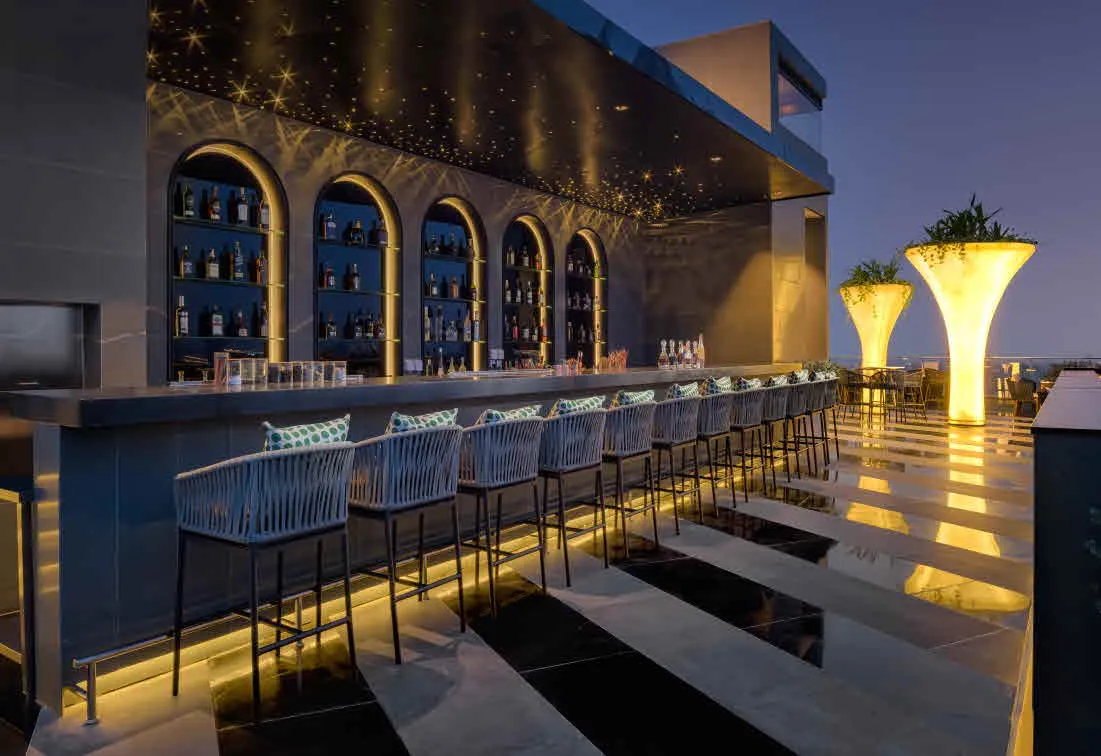
HighGround Sky Bar (Floors 25 and 26, Amass Central Tower, Street 63) offers the neighbourhood's widest panorama: Royal Palace, Tonle Sap, and the city skyline visible from the open-air twenty-sixth-floor terrace. The kitchen runs oysters, cheese platters, tapas and prime steaks alongside a cocktail list built for the view. Open five until two in the morning daily.
For something less known but equally elevated, LUMHOR (36th Floor, M Residence, Street 282) is the rooftop room that most people in BKK1 have not been to yet. A terrace bistro with a craft cocktail programme and a seasonal menu of Asian and Western plates, it opens from Thursday to Saturday at four in the afternoon, closed Mondays.
Between them those four cover most of what BKK1 can do at height. For the rest of the city's elevated rooms, including the ones hiding above Toul Tom Poung shophouses and riverside buildings, see our guide to the city's hidden rooftop bars.
Late and Classical
Two rooms in BKK1 reward the decision to stay out late.
RETO Bar & Restaurant (Street 302) stakes a claim to being Phnom Penh's finest highball destination from a Japanese-inspired bar with private rooms, yakitori skewers and a whisky and spirits list that supports the claim. Open from six in the evening until two in the morning.
Odin Bar (50 Street 306) is the underground counterpart: a Japanese-run whisky bar that is small, deliberately hard to find, and entirely serious about its selection. It opens at six and runs until three in the morning, which makes it the last room still pouring in the neighbourhood for anyone who needs one more measure before the night is done.
Tips for the Neighbourhood
The streets to know: Street 63 is the spine, but Street 278 and Street 302 hold the Japanese and Korean clusters that define BKK1 as a dining neighbourhood. Langka Lane, off Street 51, is worth knowing as a separate destination for cocktails and izakaya small plates, with Katanashi, The Garrison, Garage Sale and ARCH within a minute of each other.
Timing: The neighbourhood's midday heat is significant. The rooftops and the Langka Lane bars open from four or five onward; many of the Japanese restaurants run a split service and close between two and five. Plan lunch on Street 63 and the evening everywhere else.
Reservations: Pizza 4P's fills quickly on weekends; book ahead. Above Eleven and HighGround are usually fine for walk-ins early in the evening but fill after seven.
Cash and cards: Nearly all BKK1 addresses take card and ABA Pay. The exception is the smaller Langka Lane bars, where cash is useful for the first round.
The coffee shops: BKK1's café and coffee scene has its own guide, covering Starbucks, Temple Coffee, BROWN Roastery, Muteki, WAT CHOCOLATE, TASTELAB, Mindfulness Coffee, and nine others.
BKK1 is the neighbourhood that Phnom Penh's dining scene grew up in, and the range it has accumulated over thirty years of expat, immigrant and local cooking is wider than any single visit reveals. The Japanese quarter on Street 278, the cocktail lane off Street 51, the whisky bars that run until three in the morning: all of it sits within a ten-minute walk of the same tuk-tuk drop-off point on Street 63. That density, and the quality concentrated inside it, is what makes BKK1 the neighbourhood you keep returning to for a different meal each time.
Ready to eat your way through it? Browse every restaurant and bar in BKK1 on BongNham, then pair this with our guides to the neighbourhood's coffee shops, Korean BBQ around the grill and Japanese restaurants across the city. Making a night of it? Our evening on the quay itinerary picks the story up down by the river.